Service men and Women connected to our District
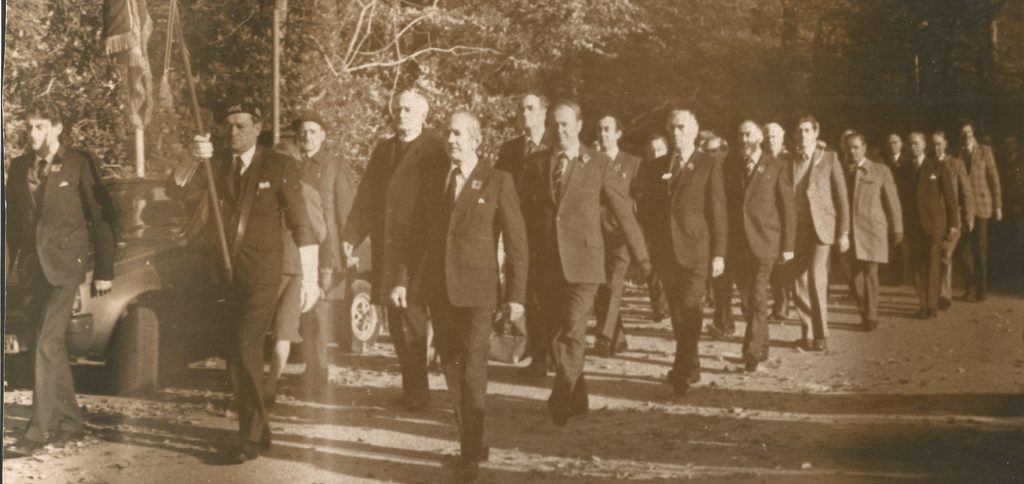
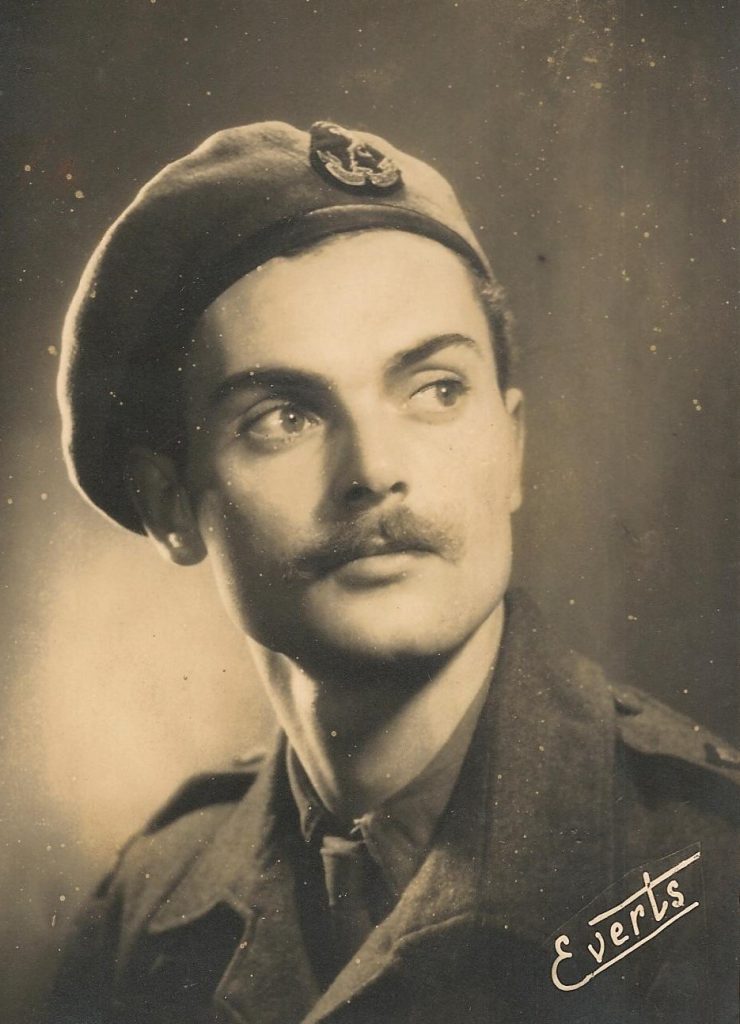
Ian Anstruther was born in Buckinhamshire the younger son of Douglas Tollemache Anstruther and his first wife, Enid (née Campbell). His maternal grandfather was Lord George Campbell, younger son of the 8th Duke of Argyll.
His parents spent 14 years in divorce and then custody proceedings from 1924, and so he spent much of his youth with his mother’s sister, Joan Campbell, at Strachur House in Argyllshire and her London house in Bryanston Square in London.
He joined the Argyll and Sutherland Highlanders in 1939 when the Second World War broke out. An amateur radio ham, he was quickly transferred to the Royal Corps of Signals, and was commissioned, ending up as a captain. He read Natural Sciences at New College, Oxford, from 1940 to 1942, before returning to Catterick to train for the invasion of France. He landed with his brigade in Normandy, three weeks after D-Day, and took charge of a team of signaller.

8th Argyll & Sutherland Highlanders then
Lovat Scouts Comando Unit (many were Gamekeepers)
From May 1940 to June 1942, the Lovat Scouts provided the garrison in the Faroe Islands protecting against the feared German invasion. After stationing in Scotland, the regiment was sent to Canada in December 1943 for specialist ski and mountain training. The training, which took place in remote areas started with basic ski training. The emphasis was on cross country work with the type of load that would have to be carried in action e.g. sleeping bag, rations for two or more days, and a rifle. This was followed by survival instructions. After this stage, there was instruction and practice in ascents on snow and ice, use of ice axe, crampons etc.
Because of its training in Jasper, the Scouts was sent to Italy, arriving in Naples in July 1944.
Neil saw the horrors of Monte Casino. He was in Greece when the end of the war came and at the liberation of certain factions in Germany (all to do with the Aryan race).



8th and then 11th Argyll & Sutherland Highlanders
Niall was in charge of piping supplies and seemingly was very frugal. Hemp was measured out to be an exact amount and no more!
Niall made many life long friends who after the war visited Strachur to see him. One lovely man John Smith from Isle of Rum (Mr. Rum) said he wanted to join the band but couldn’t play pipes or drums, so he became the Bugle player. He had a successful gambling school going for entertainment in the evening. He slept in one morning and the Officer in Charge said “I didn’t hear the Bugle this morning” He just replied “Did you not Sir.”
The worst journey they had was travelling from Barrow in Furness to Orkney in a Barge. Everyone was intensely sea sick.
While they were in England and having a usual band practise a shell came bursting into their nissen hut, they hadn’t heard it above the pipes.
Everyone had to dive under tables in all directions and luckily the shell went straight through the other wall!




RAF
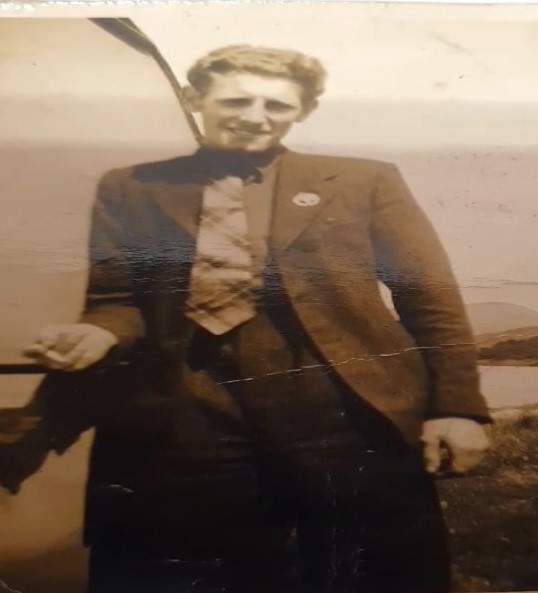
Margaret from Balliemore Farm Strachur was conscripted for war service and joined the RAF as a Driver, based at Lakenheath in Suffolk. She drove personnel and equipment, engaging in service journeys between many of the UK airfields, including those in north east Scotland. She drove both cars and trucks. When she was demobbed in 1946, she had driven 2,000 miles in the final week with the RAF.


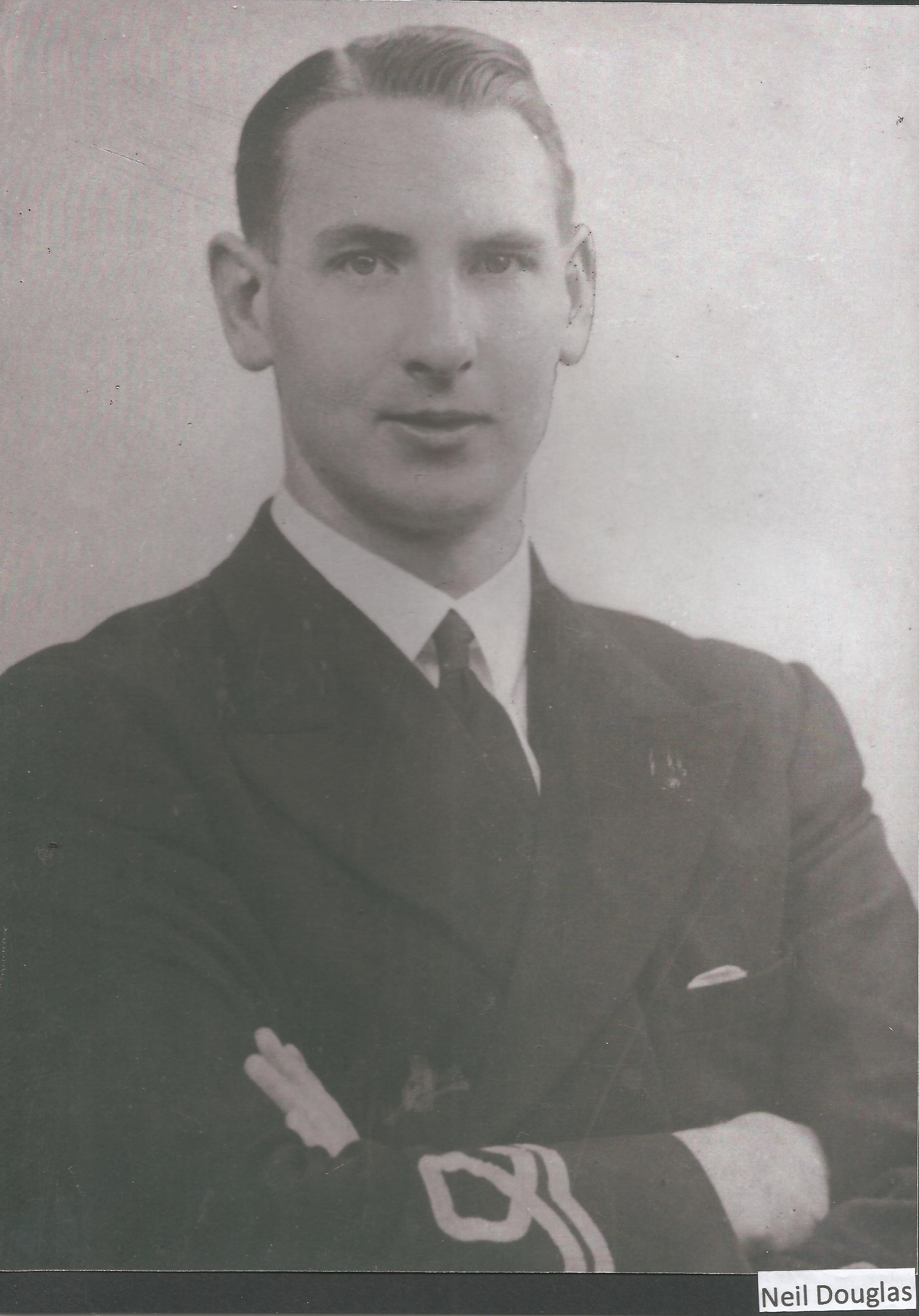
Born 16th September, 1913, Newton Strachur
Parents – James Douglas and Elizabeth McFarlane
His Siblings – Isabella Cameron Douglas b.21.09.1909
Elizabeth Buchanan Douglas b.27.02.1909,
James b. 1916 and Christina b. 1918.
Family lived in Newton from about 1851, his
Gt Grandparents – Peter and Janet Douglas.
His Grandparents were Neil Archibald Douglas and Isabella Cameron.
Grandfather Neil and father James were fishermen, James became a Yachtsman and in 1911 census James is named as Marine Engineer. He ran the ferry service between St Catherines and Inveraray, his motor boat “Endeavour”.
Neil Archibald Douglas obtained his degree from Glasgow University, MB ChB.
He married on 03.01.1941 Margaret Sutherland Gray, she was a Domestic Science Teacher and he a Physician living in Glasgow.
Surgeon Lieutenant Neil Archibald Douglas was on board SS Stockport – it was a convoy hospital rescue service which began on 22nd October, 1941. It took part in 16 convoys. On 21st February, 1943, SS Stockport was part of a convoy in the Atlantic Ocean North of the Azores, Portugal. Empire Trader had been torpedoed and SS Stockport rescued all 106 crew. The Stockport’s lonely task was to steam towards the site of the explosion and search for surviviors. The Stockport had fallen behind a convoy when picking up the survivors. After transferring the surviviors to HMCS Dauphin, she tried to rejoin the convoy but without the protection of a convoy, the Stockport was an easy target. Her crew regularly risked own lives to save others. On 23rd February, 1943 she was torpedoed and sank with the loss of all her crew. Neil is buried at Portsmouth Naval Memorial, Panel 80 Column 2.
On 23rd March, 1943, his wife and sister, Bessie attended Buckingham palace to receive his MBE from the King.


DUNCAN FLEMING
W/Sergeant
Glider Pilot
Royal Regiment of Artillery
In the small village of Luing, Kilchattan, Duncan Fleming began his journey through life on August 25th, 1910.
He was the third son of hardworking ploughman John Fleming and Isabella Clark. The family eventually moved to Kilmallie, North Ballachulish, where young Duncan grew up surrounded by the rugged beauty of the Scottish Highlands.
By 1938, he had made his home in Oban, marrying the love of his life, Elizabeth Howey at Muchairn, Taynuilt. Elizabeth was living at Cuilnasithe, Kilchrenanan at the time.
Duncan led a busy life as a roads foreman in Taynuilt by day and a territorial army gunner in his spare time. In the summer of 1939, as war clouds gathered over Europe, Duncan enlisted in The Royal Regiment of Artillery. He completed his training and was assigned to the 204th (Oban) Anti-Tank Battery, RA, part of the 51st (West Highland) Anti-Tank Regiment, RA as the family home moved from Oban to Newton, later moving to Strachur.
The regiment mobilised at Oban under the command of Lieutenant-Colonel C.N. Roney-Dougal, MC, a seasoned Royal Artillery officer. They trained at Bordon Camp before being sent to France on February 2nd, 1940, to join the British Expeditionary Force (BEF) with the 51st Highland Division. By April 22nd, they were deployed to the Saar Front to take over a section of the line in front of the formidable Maginot Line forts.
Duncan Fleming fought bravely in the 1940 Battle for France campaign along the Saar and Somme Fronts in Flanders. The Battle of France began on May 10th, as the German forces invaded the Low Countries. While the rest of the BEF advanced into Belgium, 51HD remained on the quiet Saar Front until May 13th, when heavy German bombardments signalled the start of intense fighting.
By May 22nd, Duncan’s division had been ordered to move to the Somme Front, where they faced fierce enemy resistance. Despite their best efforts, the German advance could not be halted, and the division was forced to retreat in the face of overwhelming odds. Eventually, on June 12th, 51st Highland Division surrendered at St Valery-en-Caux.
From there, Duncan was evacuated with the rest of his battery to Cherbourg Naval Base and then to the UK as part of Operation Aerial. Back in Britain, the battery was reorganized and sent to North Africa and Italy in 1943. Duncan’s unit participated in the Tunisian Campaign and was slated to join the Allied invasion of Sicily – but faced setbacks due to logistical issues.
Finally, in September 1944, Duncan found himself at the heart of the famous Battle of Arnhem, as part of the 2nd (Oban) Airlanding Anti-Tank Battery. He served as a glider pilot. Despite the heroic efforts of the men, the battle was a devastating defeat, and Duncan was captured by German forces on September 24th, becoming a prisoner of war.
Sadly, Wing Sergeant Duncan Fleming’s journey came to a tragic end in Stalag IX-B at Wegscheide, near Bad-Orb, where – after a forced march of nearly 200 miles – he succumbed to dysentery on March 27th, 1945, at the young age of 34. His sacrifice and the sacrifices of all those who fought alongside him will never be forgotten.
Duncan’s daughter Isabel McGladdery still lives in Strachur, as do a number of grand and great grandchildren.
By Gordon Neish
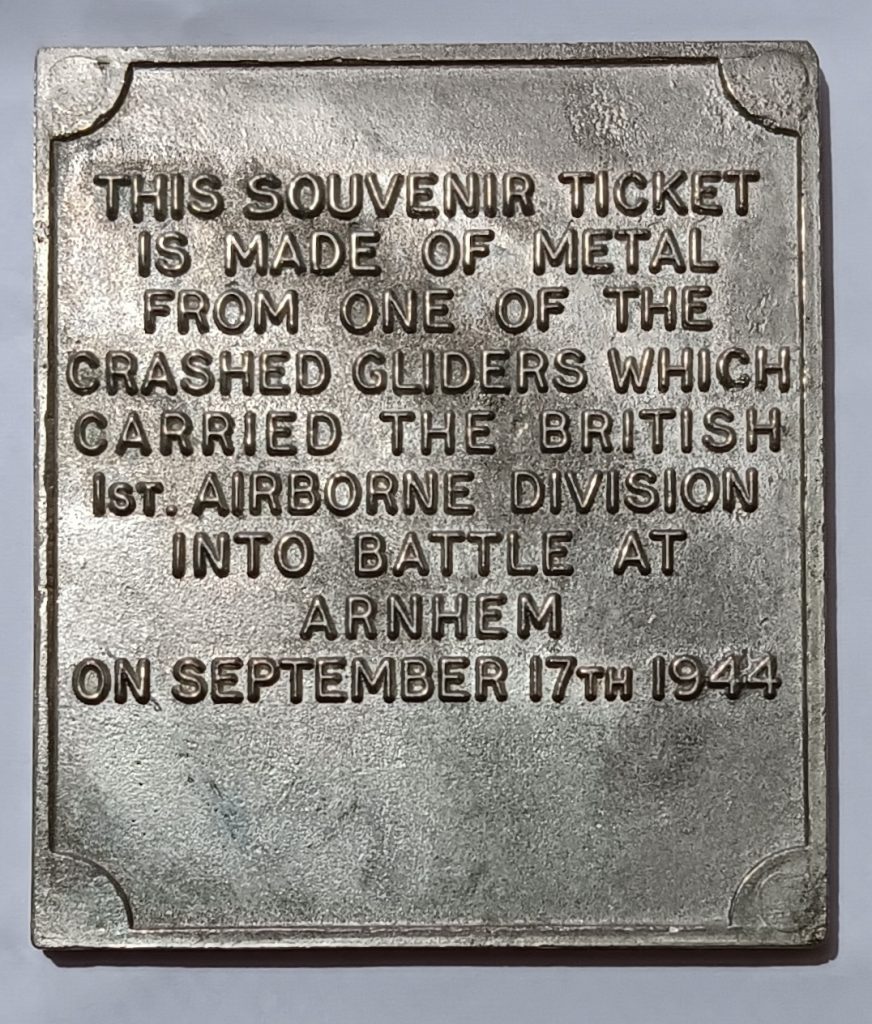


H. DOUGLAS HARRISON
From his book THE TWO STRATHS
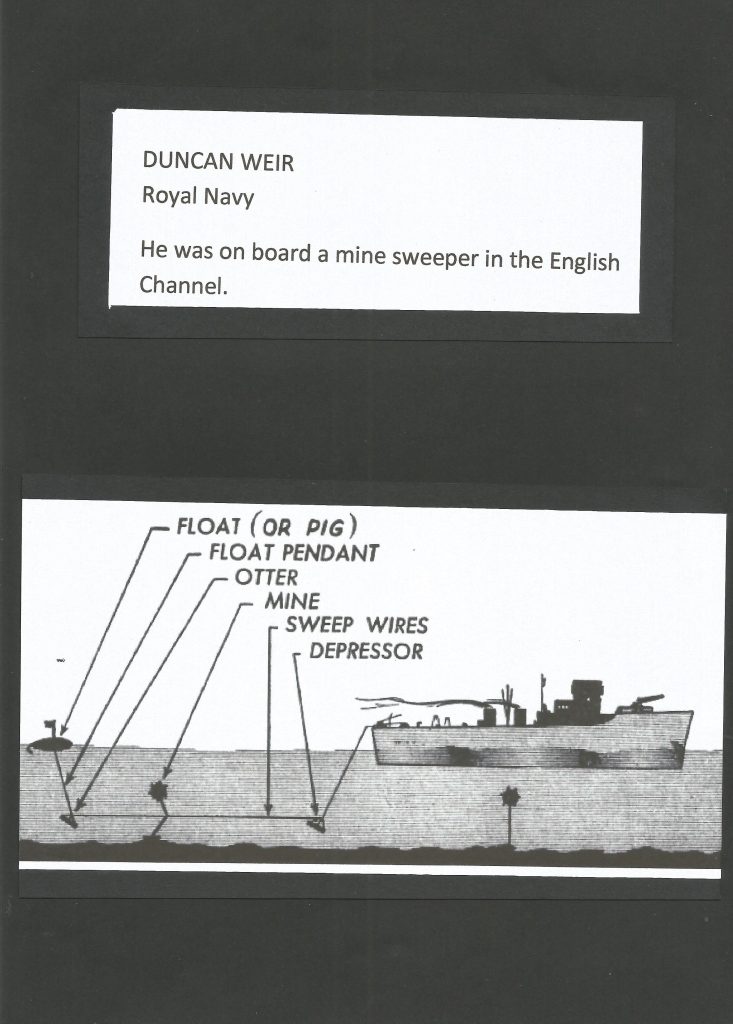
Just after my eighteenth birthday my orders instructed me to report to HMS Royal Arthur, a training establishment at Skegness in Lincolnshire. After six weeks of ‘Square-Bashing’, I was sent to Isleworth in Middlesex to train as a mechanic. After training I was selected for a specialist course in the dockyard at Chatham in Kent and finally, now as accredited Engineer, to HMS Albatross, a minesweeper depot ship. Later I was sent to the Far East to join HMS Pelorus, a minesweeper on active duties in Malaysian waters. On my return to the UK I still had a spell to do, first on HMS Jason and lastly on HMS Wave. Both were ‘sweepers’ seconded to Fishery Protection duties in the North Sea and were based at Lowestoft in Suffolk. Between defiant trawler skippers, who would rather risk a minefield than lose a fish, and the weather, our patrols were no easy task!
(HERBERT) DOUGLAS HARRISON
Tank Sergeant
Robert Johnston was wounded at Dunkirk and sent to Ireland for recovery. As soon as he was well he was sent to the tank regiment headed to North Africa where he was promoted to Tank Sergeant, then went up though Europe.
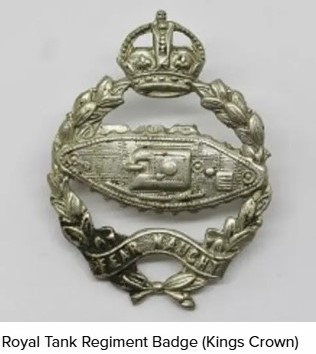
Men who cheerfully went to war in tin cans closely surrounded by a lethal mixture of petrol and ammunition.


Cameron Highlanders
Dad was employed as a builder at Fergussons at the start of the War. This was deemed a reserved occupation so he didn’t join up immediately but served in the local Home Guard.
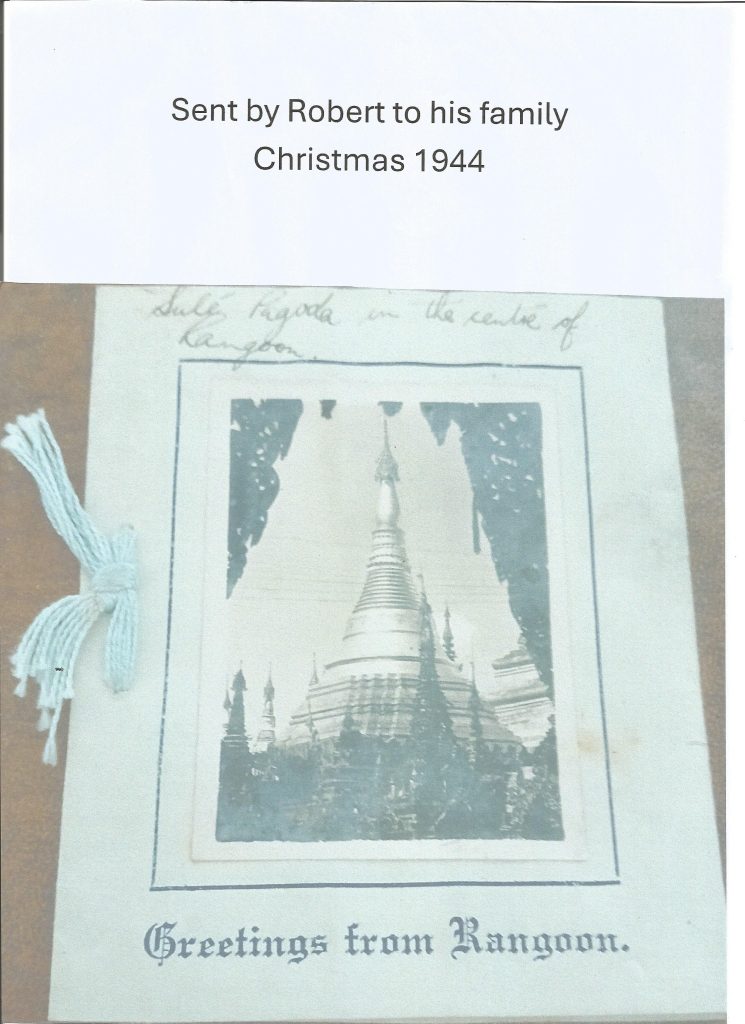
Later, he joined the Cameron Highlanders and served in Burma. He was involved in heavy jungle fighting which, as with most of those guys, he was loathe to discuss in later years. He would talk fondly however of the pals he made and the places he was able to visit, post-War. He served in Japan after the War as part of the mopping up operation.
I recall him saying that on returning to Strachur, he was back at work within a day or two.
What a burden those boys carried.
Duncan Luke Jnr.


Sgt. Freddie McAllister
8th Argyll & Sutherland Highlanders
On 1st September 1939, Germany invaded Poland, prompting Britain and France to declare war on Germany on 3rd September 1939, officially marking the start of World War II. This declaration came after the Allies issued an ultimatum to Germany, demanding the withdrawal of troops from Poland, which was not heeded. Through national conscription limited recruitment had already started in May 1939 and by September 1939 full conscription started.
By 30th September 1939, the 8th Argyll & Sutherland Highlanders moved to Aldershot to join the 51st Highland Division (51st HD). The 8th Battalion, along with the 7th Battalion, formed part of the 154th Highland Infantry Brigade within the 51st HD. They move to France in early 1940 and were station on the Saar Front around Metz at the north end of the Maginot Line.
In April 1940, Hitler had invaded Denmark and Norway. Holland, Belgium, and Luxembourg followed suit on the 10th of May, and the Battle for France had started. Initially the British and the French moved into Belgium to meet two German armies. However, a third German Army had forced a breach through the Ardennes Forest and threatened the whole form by attacking down the Somme valley to the Channel coast at Abbeville, forcing the British and French armies to retreat and a major evacuation plan was formed through the port of Dunkirk. By then the 51st HD was redeployed from the Saar Front to Abbeville on the Somme to hold off a German bridgehead there. A number of Argyllshire men, Freddie among them, fought a continuous rear-guard action against superior enemy forces south, in and around the Abbeville area on the Somme as allied troops evacuated from Dunkirk. Once the evacuation was completed on 4th June the German Armies reformed to attack what was left of the allies south of the River Somme.
This new campaign started on 5th June. By now the allies had been greatly weakened and Freddie with his comrades conducted fighting retreat with a planned withdrawal and eventual evacuation through Le Havre and Saint-Valery-en-Caux. The 51st HD, including Freddie’s 8th Argyll’s, mostly from Cowal, Kintyre, and Mid Argyll, became surrounded by Rommel’s 7th Panzer Brigade (the infamous Ghost Division) and were forced to surrender at Saint-Valery-en-Caux on 12th June.
Freddie saw out the rest of the war in Stalag IXC POW Camp near Leipzig. On 29th March 1945, the Camp was evacuated and the POW’s were forced to march eastward in advance of the US offensive. For some the march lasted 4 weeks before being freed by Patton’s US 3rd Army units.


Ronnie McCallum – Pipe Major
11th Bn Argyll & Sutherland Highlanders
he stayed at Glensluain, Strachur and was Piper to Lady George. Later he moved to Inveraray and became piper for The Duke of Argyll.
At the outbreak of war Ronnie was serving with the 8th Argyll & Sutherland Highlanders as Pipe Sergeant to Nicol McCallum. He became Pipe Major of the 11th Bn. on its formation and remained with them till demob.
The role of the band was to travel round Britain to raise morale, ispire and encourage recruitment for War Service.


PETER DOUGLAS
Skipper
From Newton
DUGALD ,McFADYEN
Engineer Chief Petty Officer
From Stuckreach
His brother IAN McFADYEN, Crew member
All three were on board SY Coila, a Steam Yacht which was requisitioned as a costal partrol vessel covering the area from Liverpool to Lowestoft, round the north of Scotland. Its main armament was depth charges. The crew were instructed to test these depth charges periodically and the fact that many crew members had the knowledge to spot a shoal of fish, this was considered a good place to test a depth charge. Smoked fish appeared in the post to Strathlachlan from time to time.
information from John McFadyen

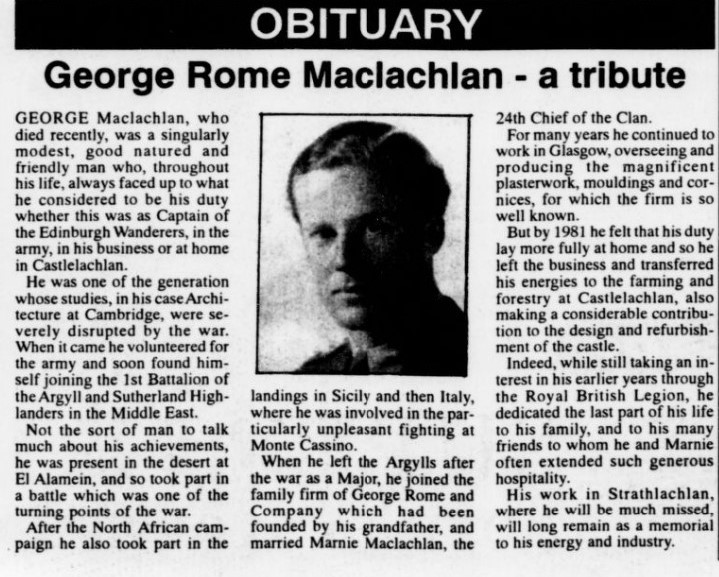
George Stiles Rome – George volunteered for Army Service and enlisted with Argyll and Sutherland Highlanders. he saw action in the Middle East. Fought in the battle of El alamein. After the North Africa campaign, Sicily and then Italy, Monte Cassino was particularly horrific.
During the war he had risen to the rank as Major. George remained in the army for a while after the war as in 1952 he was Captain with The Royal Scots.

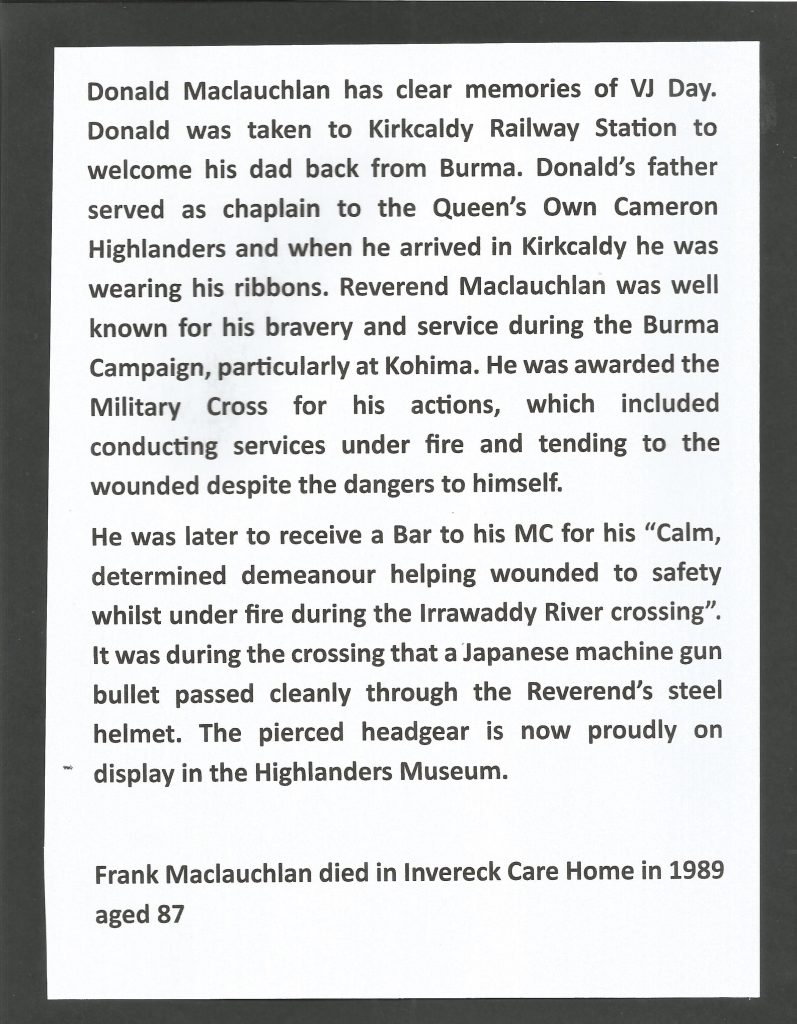


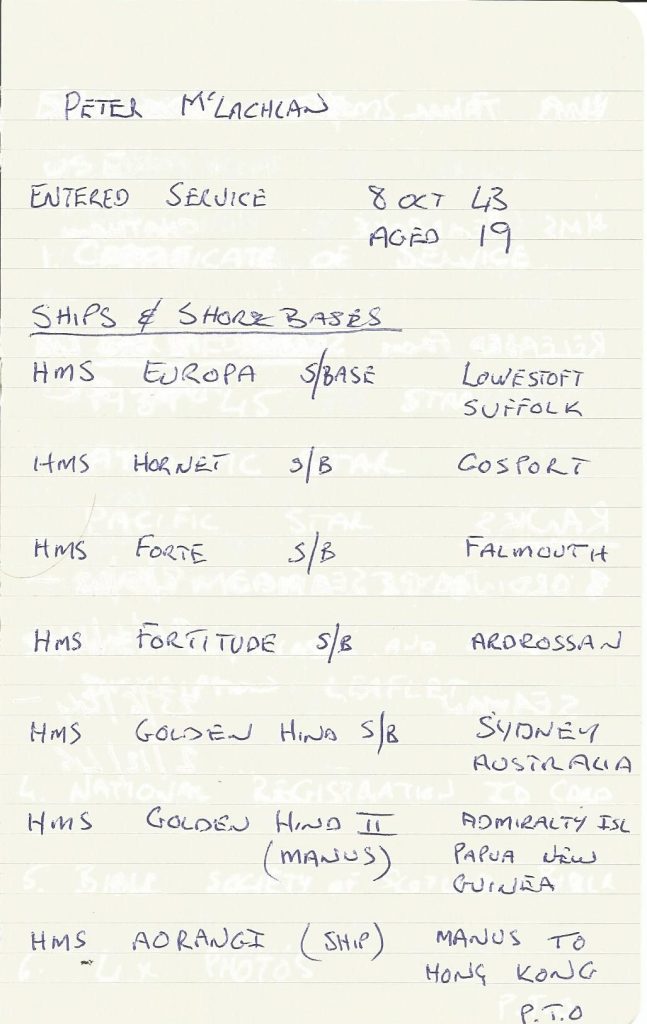
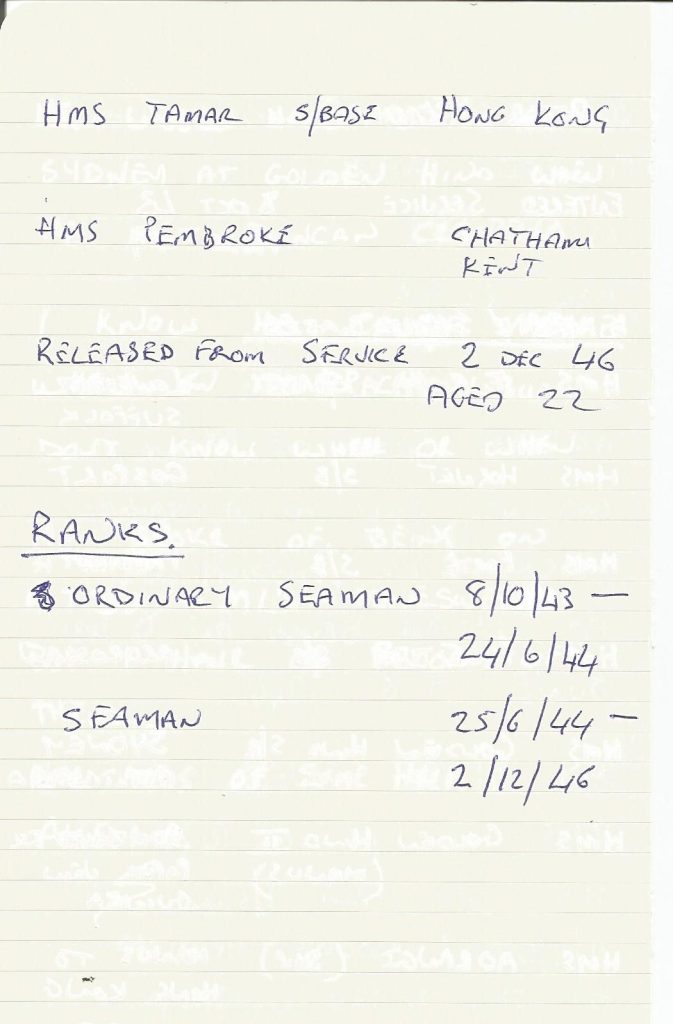


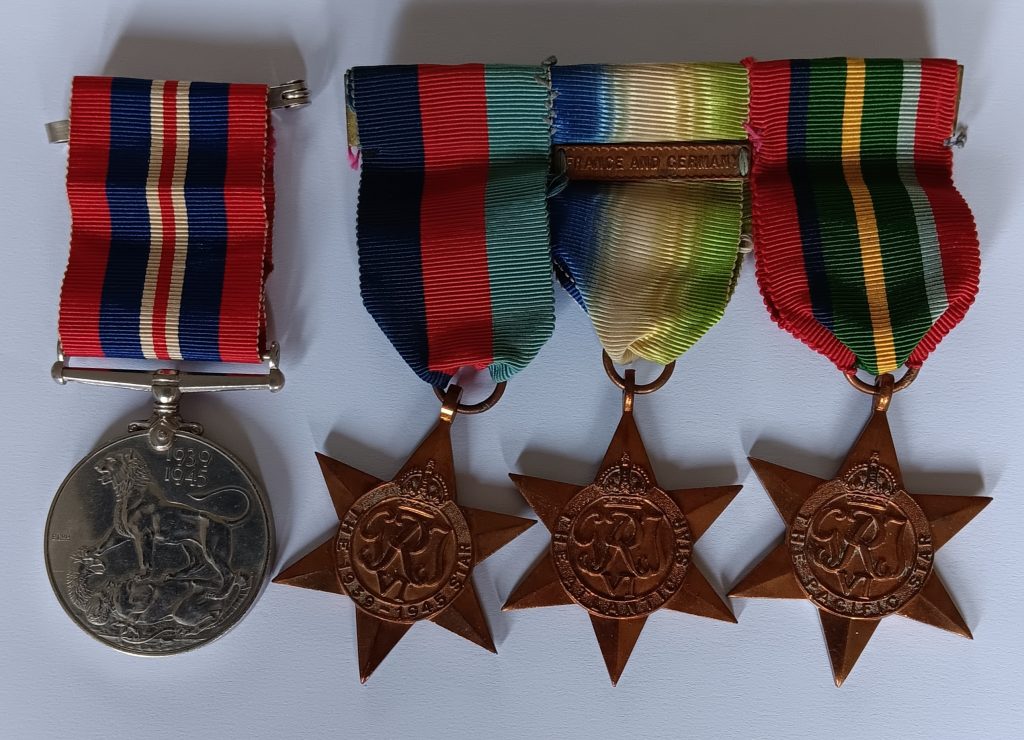


Marnie and George met after the war on Arthur’s Seat! They were introduced by a wartime great friend of George’s, Bill Dunn. They were married in 1948. George took the Maclachlan name as Marnie was now Chief of the Clan.
Marjory (Marnie) enlisted with First Aid Nursing Yeomanry (FANY) based in France, she was an ambulance Driver. In 1939 she and her party escaped across the River Seine as the Nazi forces approached.
Frances maclachlan was Marnie’s sister she was also doing war service.


Sir Fitzroy Maclean of Dunconnel, Bt. (1911-1996)
Before World War II, Sir Fitzroy Maclean served as a diplomat at the British embassy in Moscow. From there he made several
notable journeys to the Caucasus and Soviet Central Asia, often shadowed by NKVD agents, the forerunners of the KGB. During the war, Sir Fitzroy joined the Cameron Highlanders as a private and volunteered for the Special Air Service Regiment, taking
part in the regiment’s famous operations behind enemy lines in the Western Desert. In 1943, at the age of thirty-two, he was promoted brigadier and secretly dropped by parachute into German-occupied Yugoslavia as Winston Churchill’s personal envoy and Commander of the British Military Mission to Tito and the partisans. He recorded some of these experiences in ‘Eastern Approaches’, a classic memoir of true-life adventure. In 1957 Sir Fitzroy moved with his family to Argyll, buying Strachur House and estate from Miss Joan Campbell. He was a Member of Parliament (for Lancaster, then Bute and North Ayr) from 1941 to 1974, serving as Under Secretary for War in the post-war Churchill and Eden governments. Diplomat, soldier, statesman, traveller, writer — a true modern hero — Sir Fitzroy was often put forward as the model for Ian Fleming’s James Bond, a distinction he neither accepted nor denied. He wrote many other books including a biography of Bonnie Prince Charlie and a history of the clans. In1994 he was created a Knight of the Thistle.

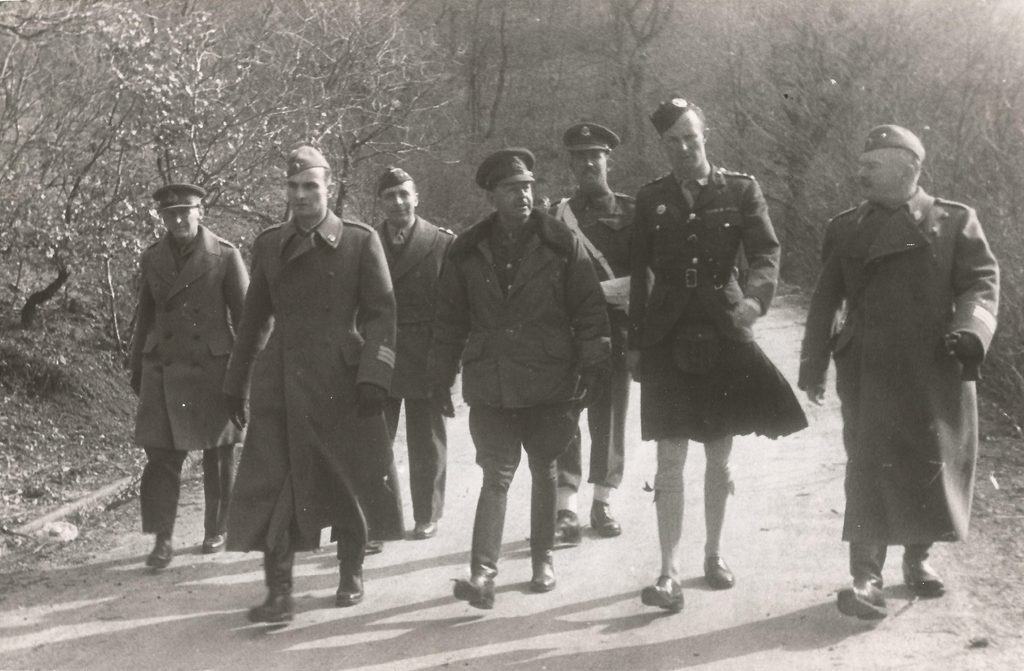
In his WW2 service he enlisted as a private and rose to the rank of Brigadier.
Awarded a baronetcy, becoming 1st Baronet, Maclean of Strachur and Glensluain.
Invested a Knight of the Order of the Thistle (KT).
Appointed a Commander of the Order of the British Empire (CBE).
Recipient of the Croix de Guerre (France),
the Order of Kutuzov (Soviet Union),
the Order of the Partisan Star (Yugoslavia),
and, posthumously, the Order of Prince Branimir (Croatia).

DUNCAN CRAWFORD and ARCHIBALD McNAIR
Both Royal Navy. Duncan was Gunner
They served on the destroyer HMS Chaser delivering essential supplies vital to keep Russia in the war following her invasion by German forces in 1941.
There were 78 artic convoys between 1941 and 1945 and about 1400 Merchant ships. The Royal Navy was escorting the Merchant ships.
Duncan Crawford was brother of Mary Beaton.
Archie McNair was brother of Thomas MacNair, Stuckreach, who sadly lost his life in WW2. Archies’s two other brothers John and Charlie also were doing war service


THOMAS McNAIR
Merchant Navy
Thomas’s Gt Grandparents stayed in Leachd at the time of the 1841 Census. His Grandfather John continued to stay there after his marriage, then in 1871 census his grandparents moved to Stuckreach to bring their family up. Both his Father and Grandfather earned a living from the sea.
Thomas’s parents, Thomas McNair and Sarah Steel married in Clydebank in 1916. Their first three children were born in Dumbarton, John, Thomas and Margaret. In 1921 Census family are living at House on Bridge, Poll, St. Catherines, then were living in Stuckreach when Charles was born in 1924, followed by Archibald in 1926.
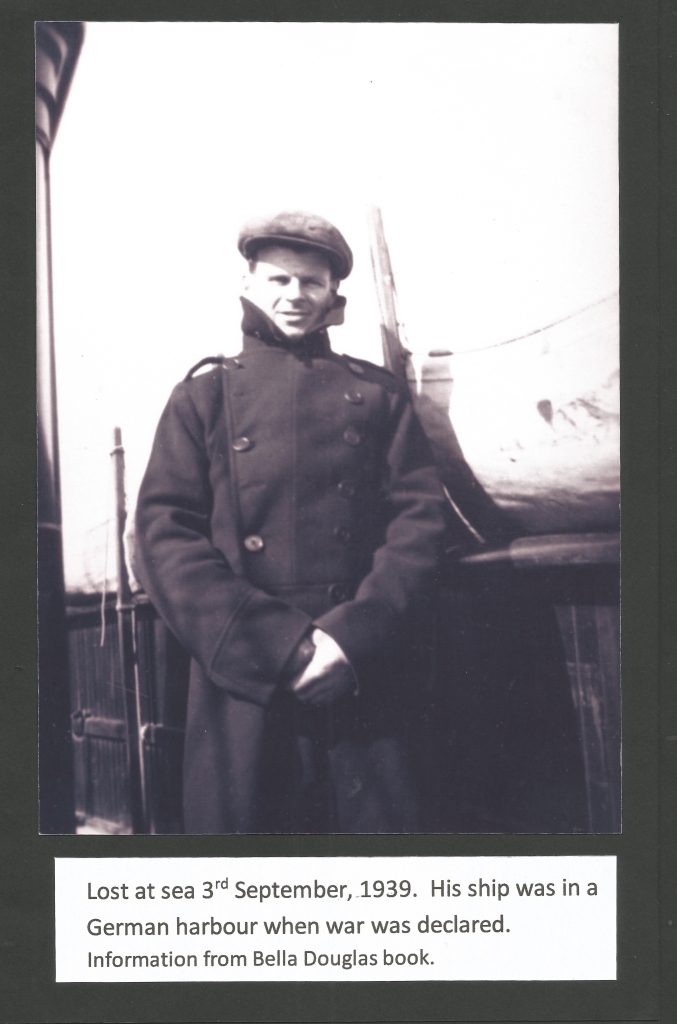
Thomas enlisted in the Merchant Navy as Able Seaman on San Arcadio, a British Motor Tanker which was attacked on 31st January, 1942. It was hit in the bow by two torpedoes and caught fire, north of Bermuda. Although 9 were rescued, the Master, 37 crew and 3 gunners were lost. Thomas was only 23 yrs.
Thomas’s three other brothers also served during the war, all named on the roll of honour. John, Charles and Archibald.
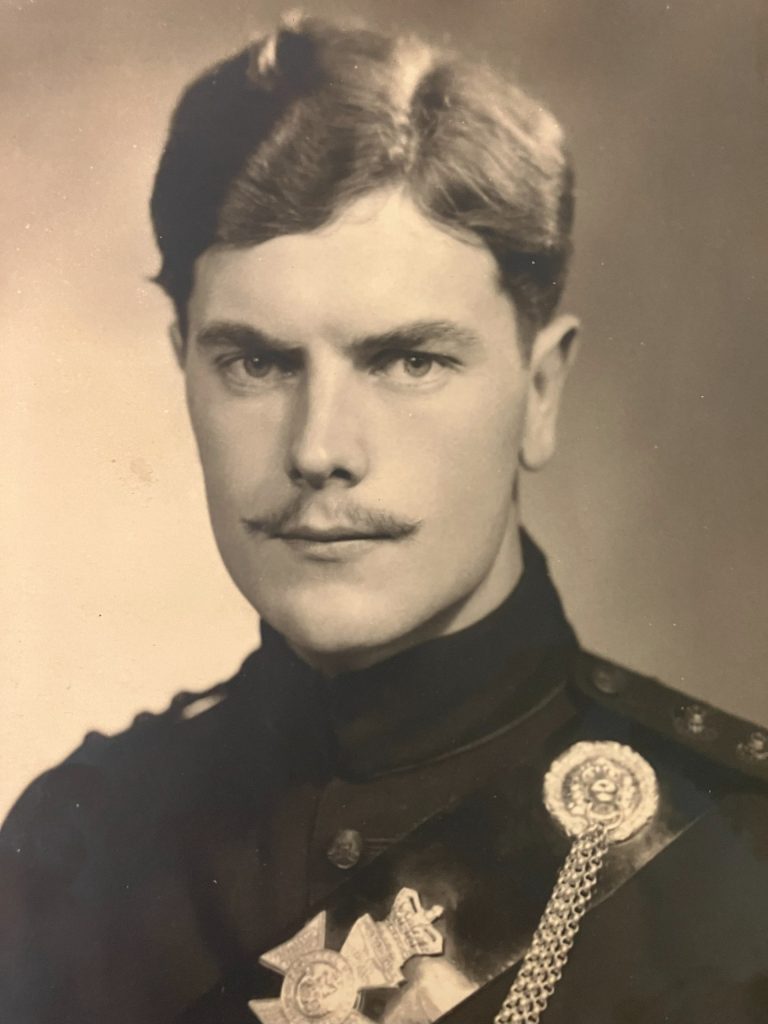

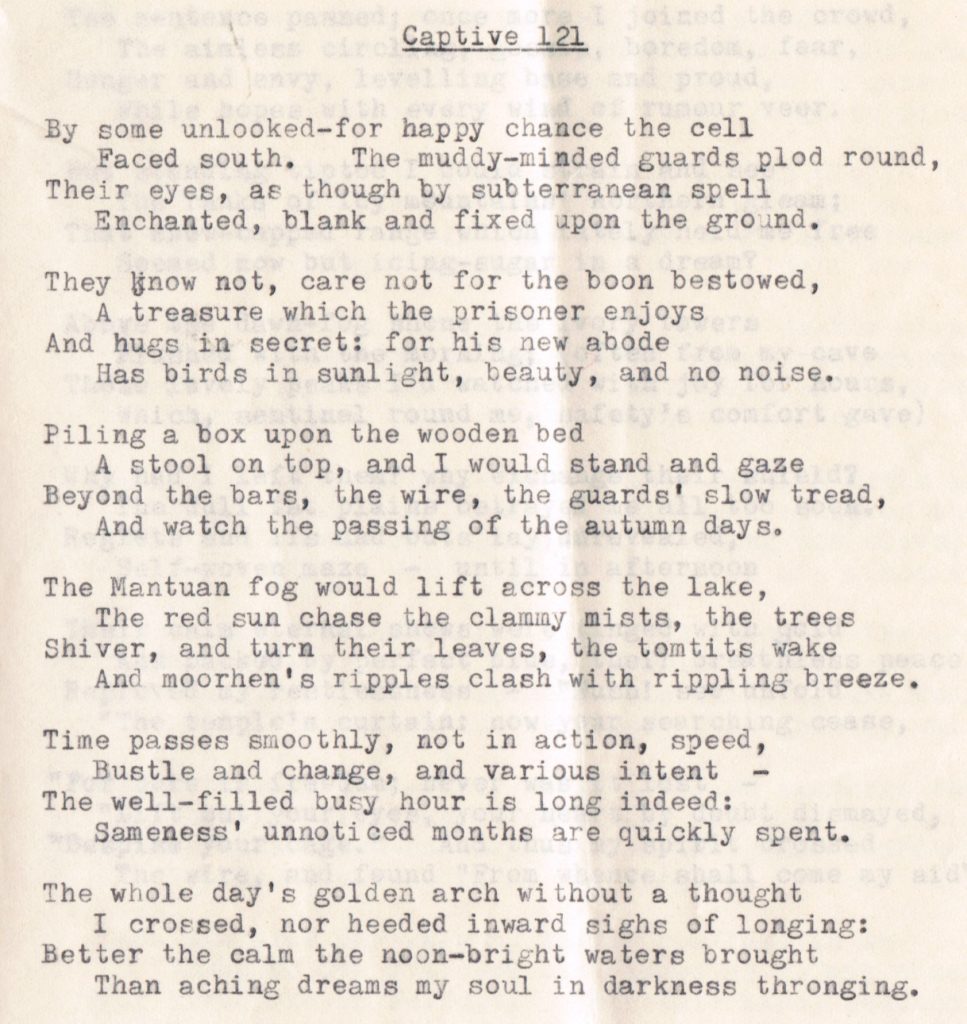
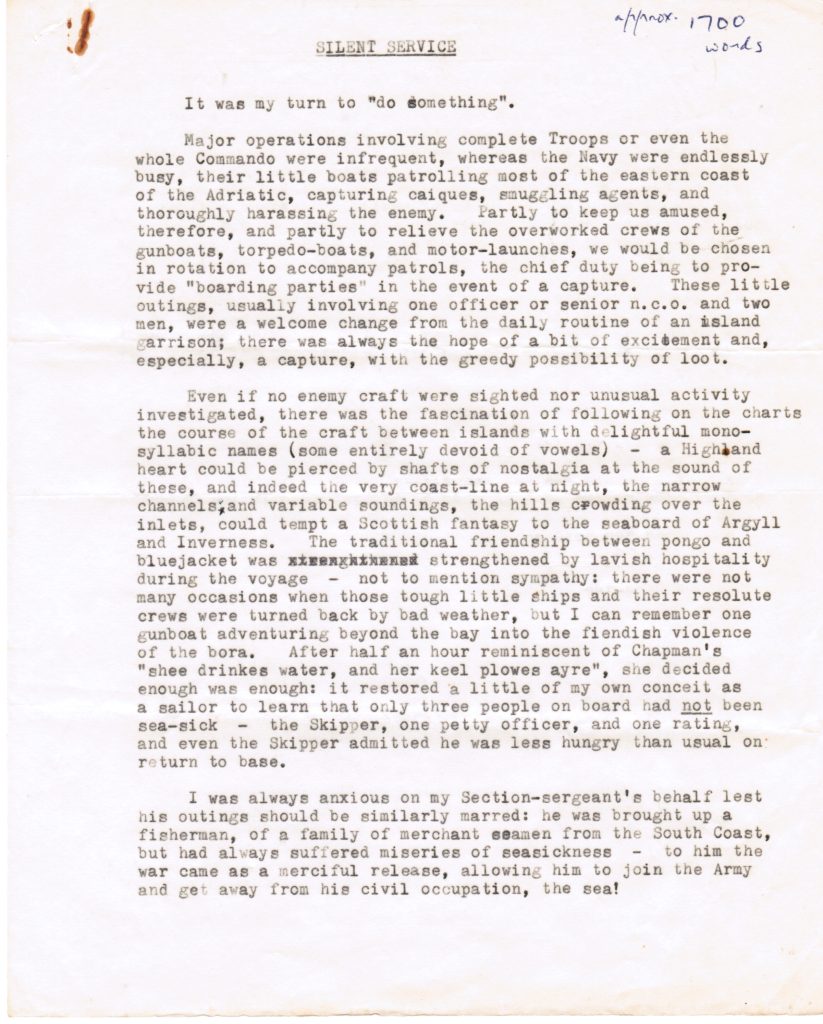
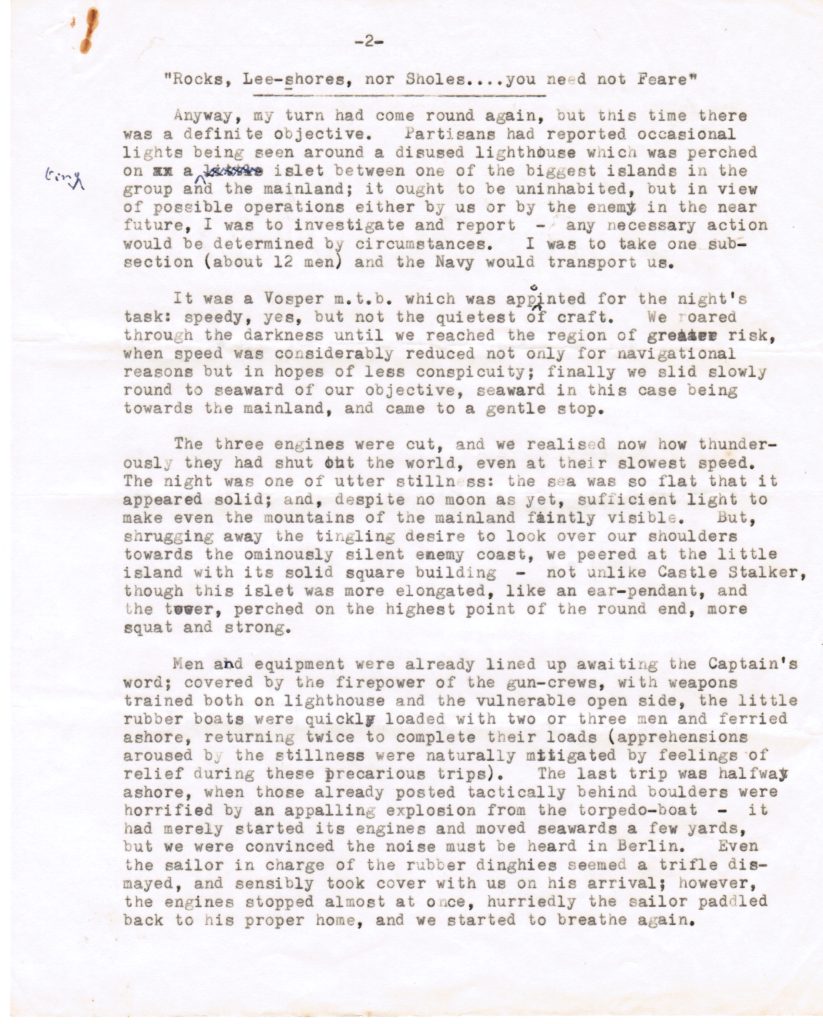
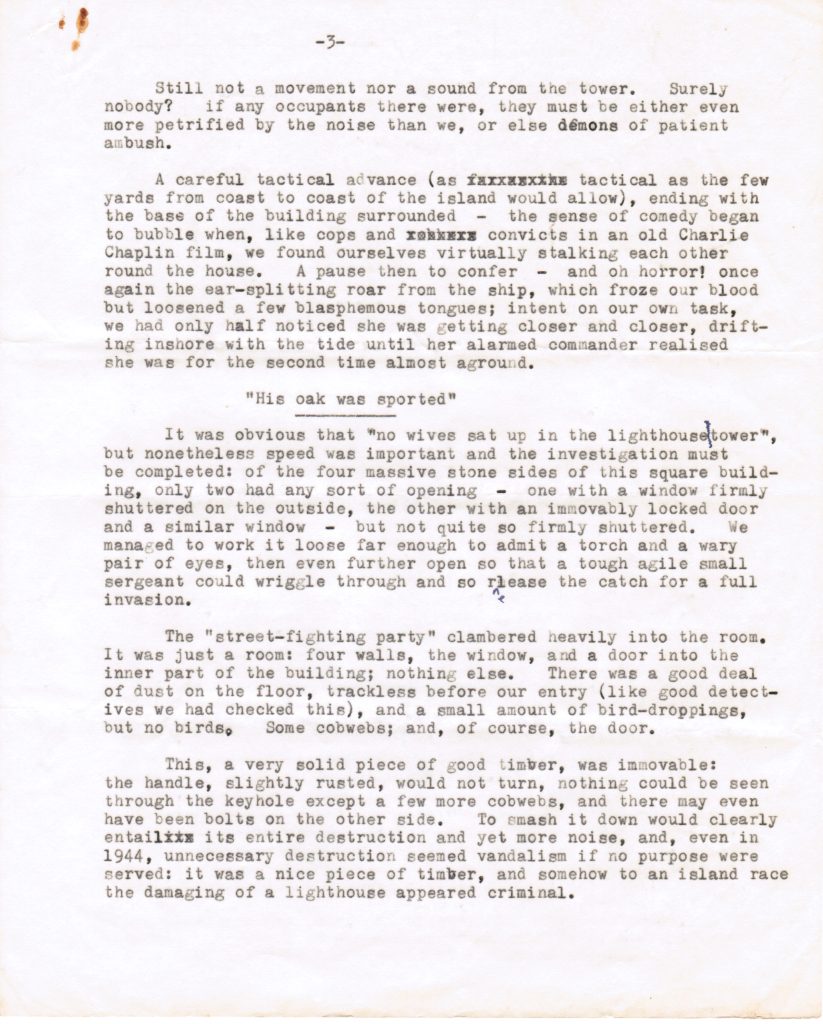


Staff Sergeant
Royal Army Ordance Corps.
Donald was at the beaches of Normandy and eventually in Holland until they were liberated.
Donald said –
I remember when I landed in Normandy. There was an awful swell. The landing craft met you, with the swell it went down and then came back up and you had to jump in. There was scramble nets on the side of the boat, you went down the scamble nets. Some of the platoon misjudged that. And I remember one lad, he would not come down. They were hitting his fingers, he was hanging on to the rail, he wouldn’t let go, it was pure nerves. I shouted ‘tie a rope on him’, and he wouldn’t allow that. He wanted me to tie the rope on him. I had to go back up the net and tie the rope on him. He came down with me, “another foot down, Joe; another foot down, right Joe, we’re aboard, are you alright? Oh I’m alright now.”
Each person had two discs round their neck, a red one and a green one. It gave the number, your name and your religion. The one on a short tab was taken off when you buried someone and handed it in for the records.
We never got much sleep for a week at a time. But you would just lean against something. Just ten minutes would refresh you. You were on hard rations, you see. hard biscuits. There was something in those biscuits that must have been full of nourishment because they kept you going.
We would just sleep under the lorries or round the back of the lorries. If there was stuff flying about you were safer underneath them.

Davie Scott was enlisted into the Cameron Highlanders. But because he was blind in left eye he was released and sent to Finliston Shipyard in Govan to work on the navy ships as a ships carpenter.
His brother John was killed during military training on the beaches. Possibly Campbeltown.
His brother Jim who came to Strachur was in the Royal Air Force.


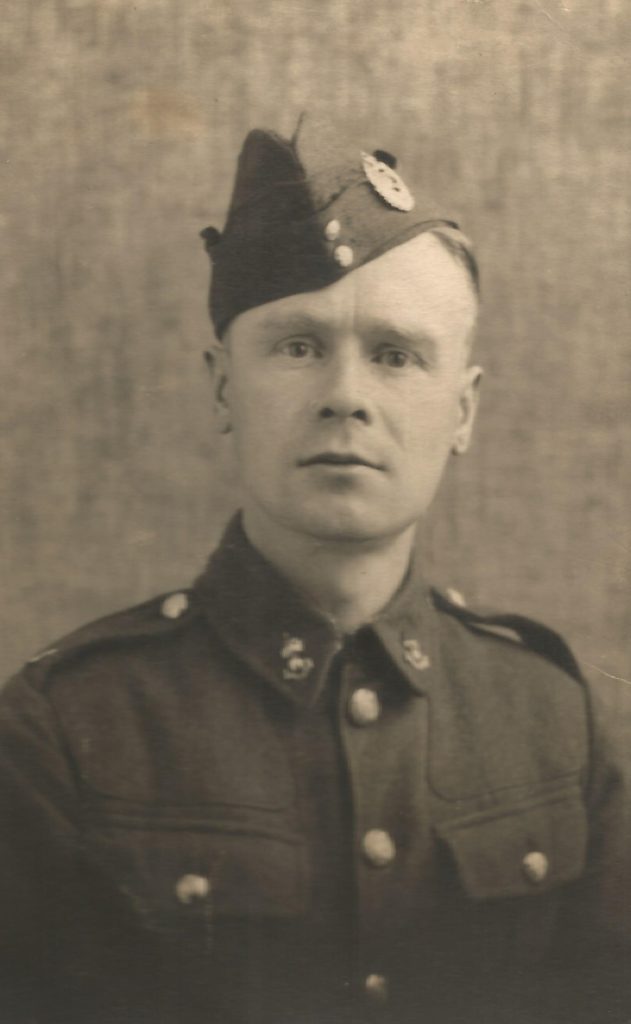


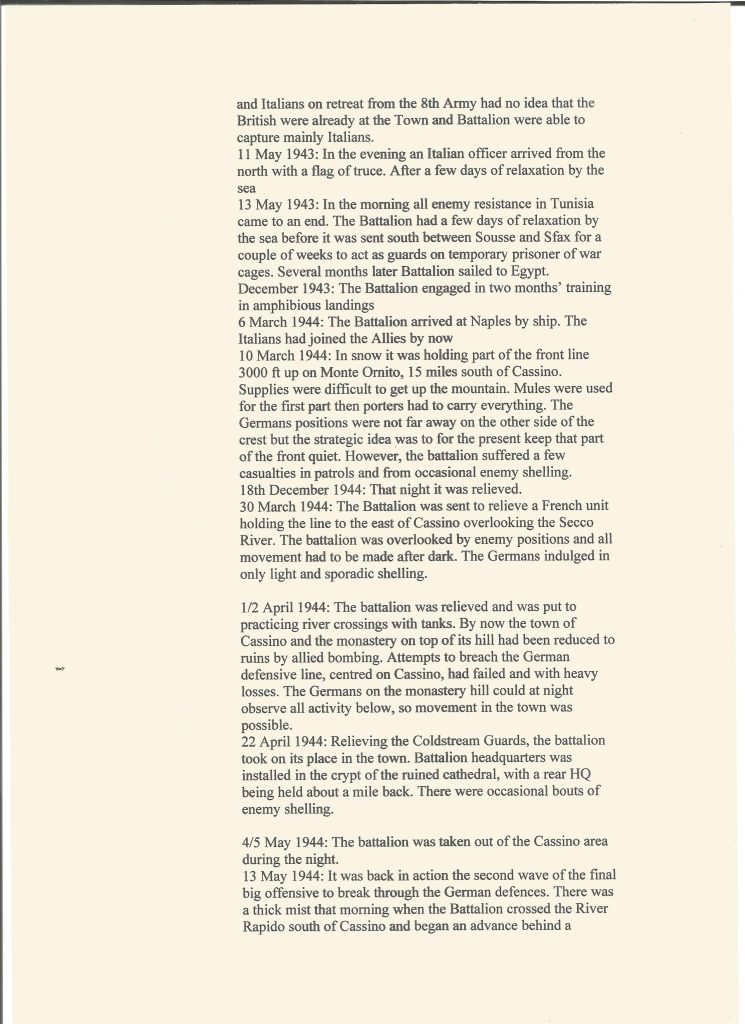
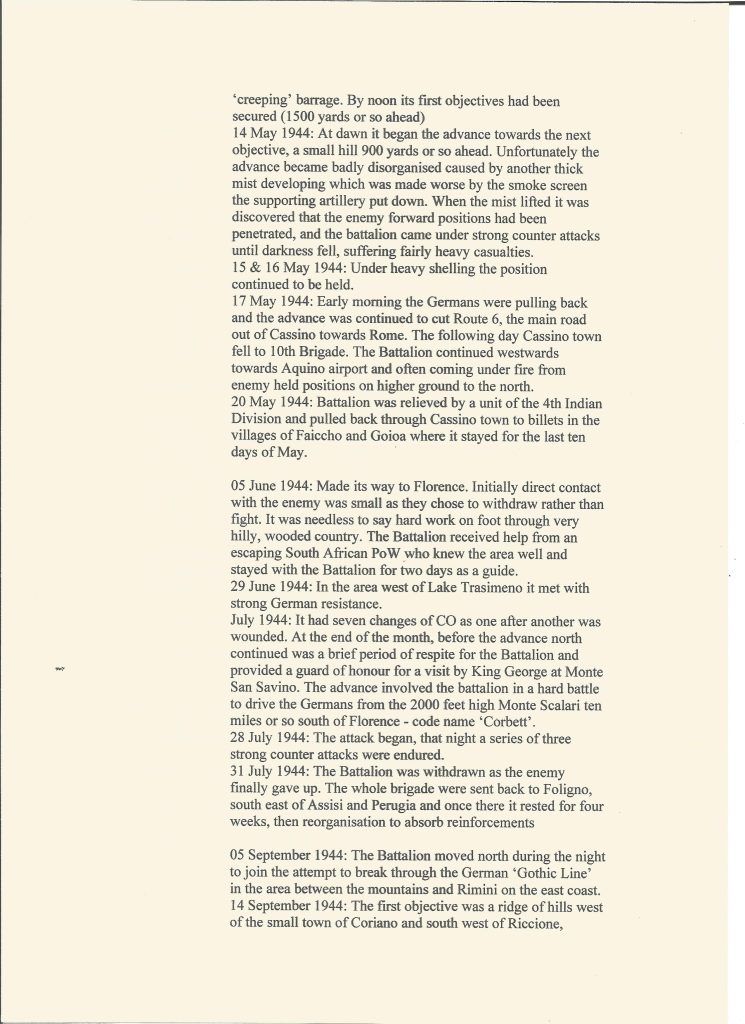
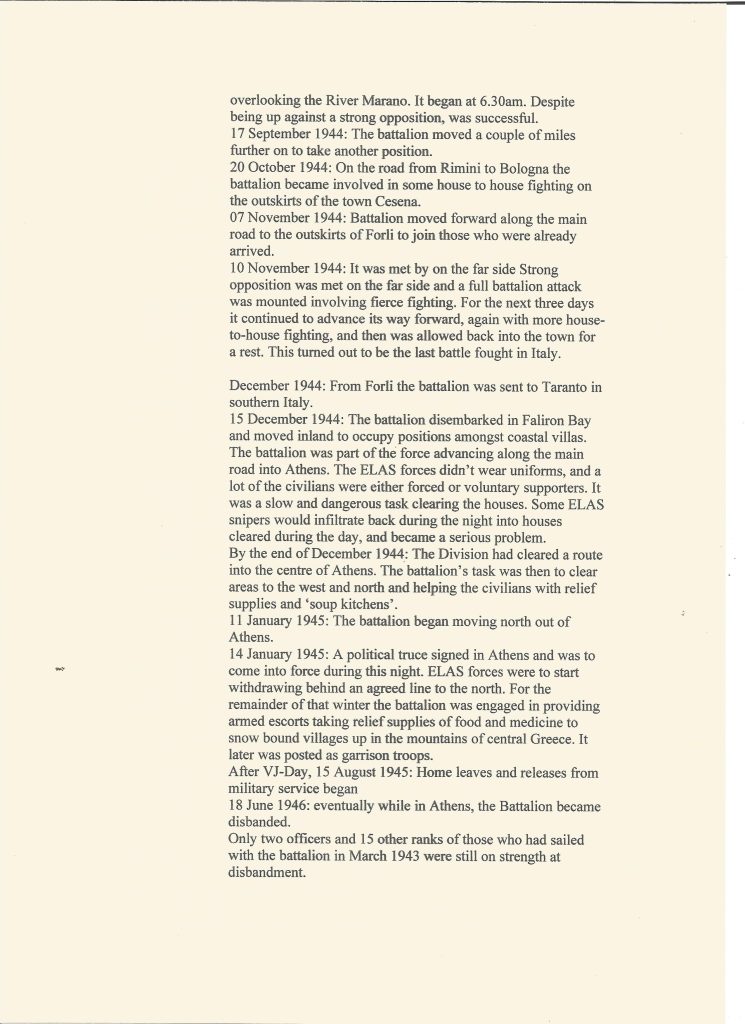

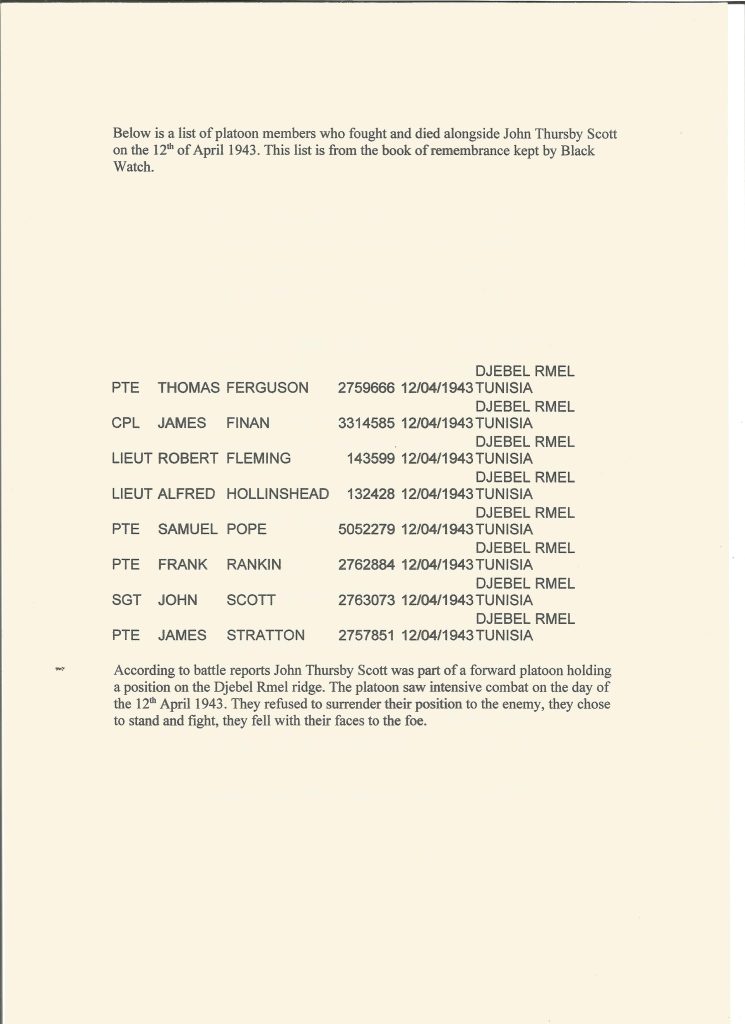
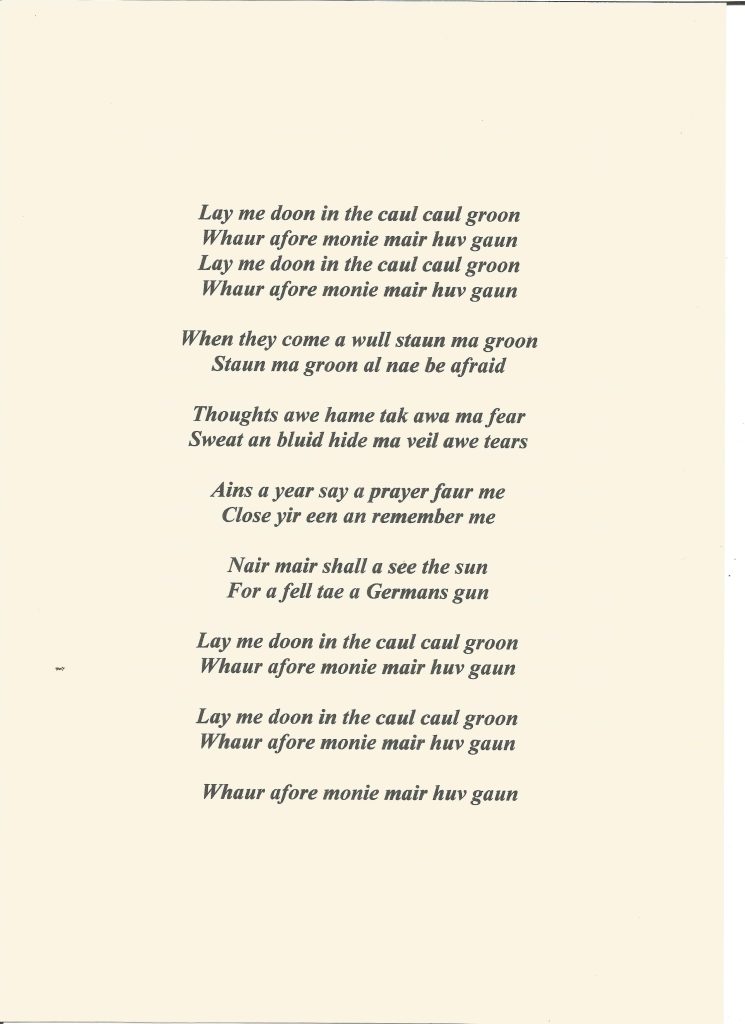
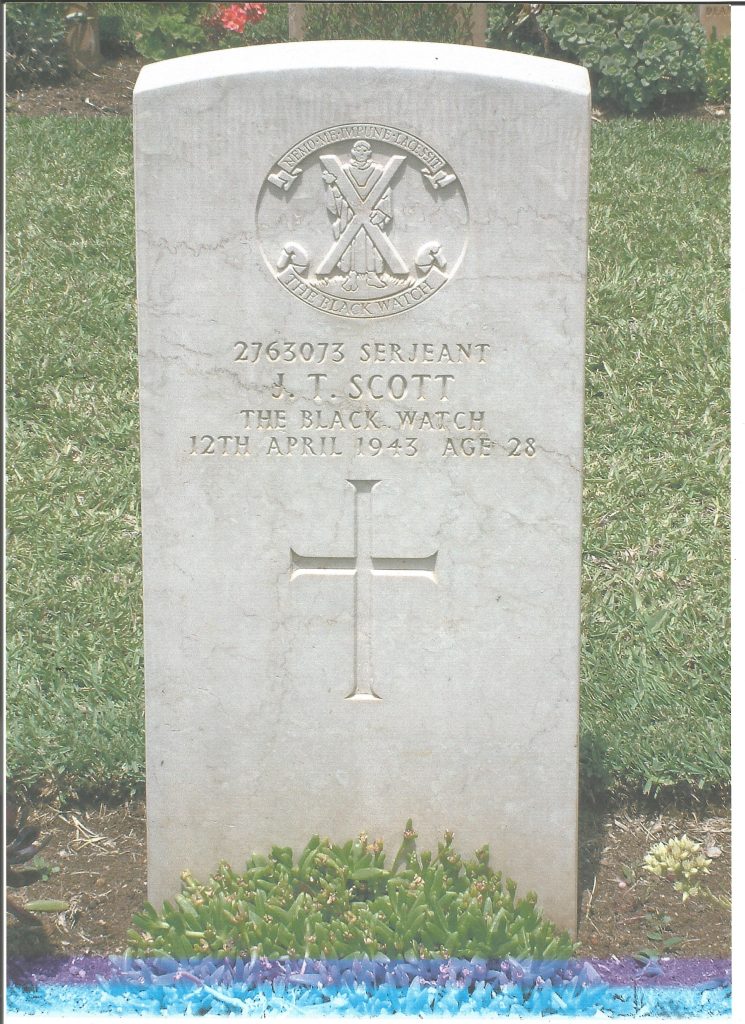


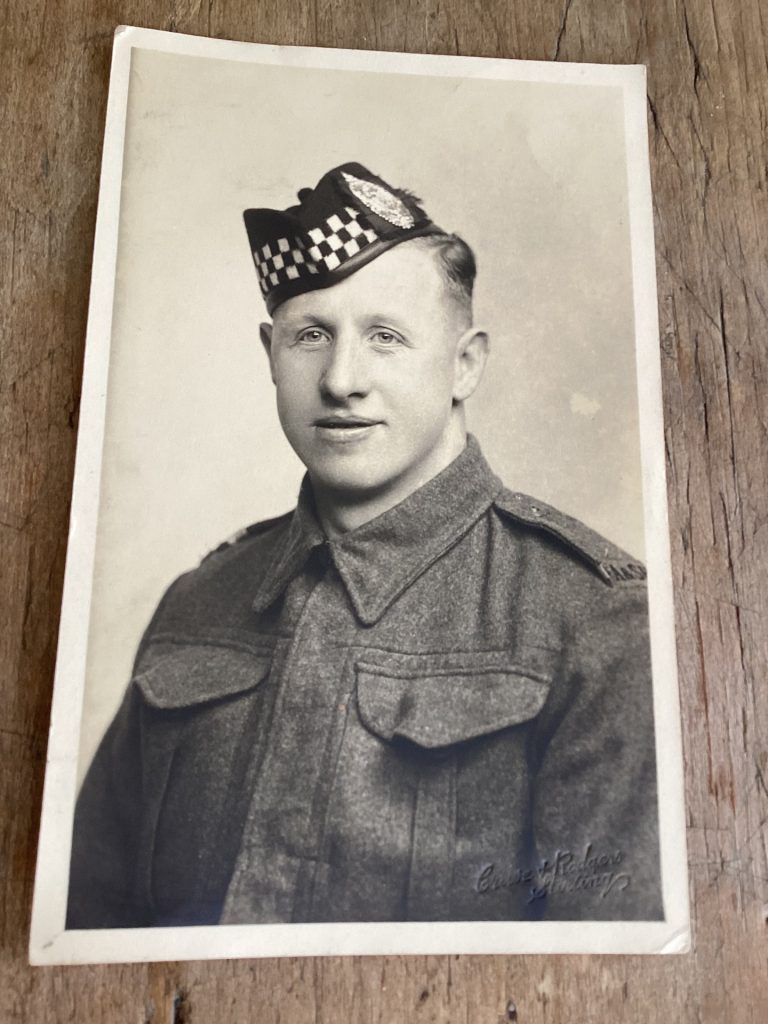

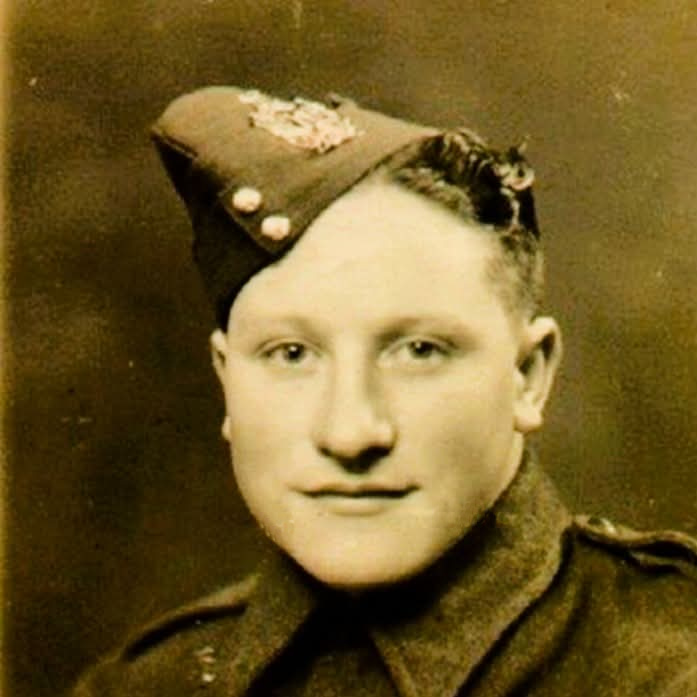
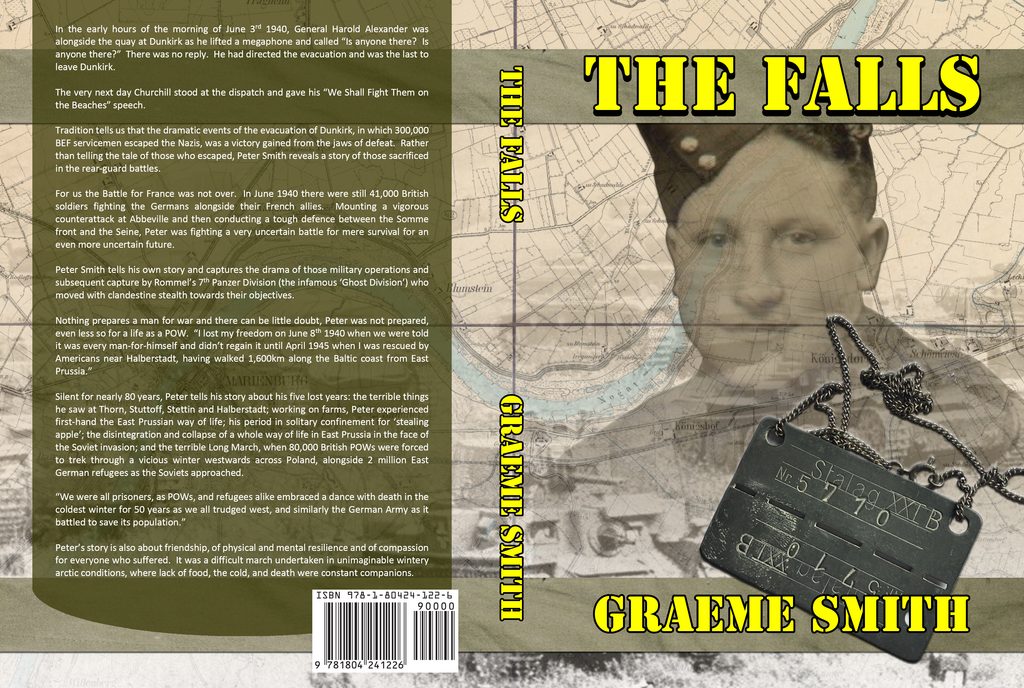
Graeme CM Smith’s The Falls (MX Publishing, 2022) is a compelling wartime memoir that offers a deeply personal perspective on Peter’s experience during World War II, particularly focusing on the often-overlooked rear-guard actions following the Dunkirk evacuation. The narrative centres on Peter Smith, a young Scottish soldier who, after the main evacuation, remained in France to engage in critical counterattacks and defensive operations against the advancing German forces.
Peter’s account provides a vivid depiction of the harrowing realities faced by those who were left behind. Captured by Rommel’s 7th Panzer Division, known as the “Ghost Division,” Peter endured five years as a prisoner of war. His memoir details the brutal conditions of POW camps, the psychological and physical toll of captivity, and the infamous “Long March”—a forced westward trek through the harsh winter of 1945 alongside fellow POWs and refugees fleeing the Soviet advance .
Beyond the recounting of military engagements and hardships, The Falls delves into themes of resilience, camaraderie, and the human capacity to endure in the face of adversity. Peter’s reflections offer insight into the complexities of war, the sacrifices made by countless individuals, and the enduring impact of these experiences on those who lived through them.
The Falls stands as a significant contribution to World War II literature, shedding light on the personal stories that underpin historical events. For readers interested in firsthand accounts of wartime experiences, particularly those that explore the less-discussed aspects of the conflict, Peter Smith’s memoir provides a poignant and enlightening perspective under the Nazis.


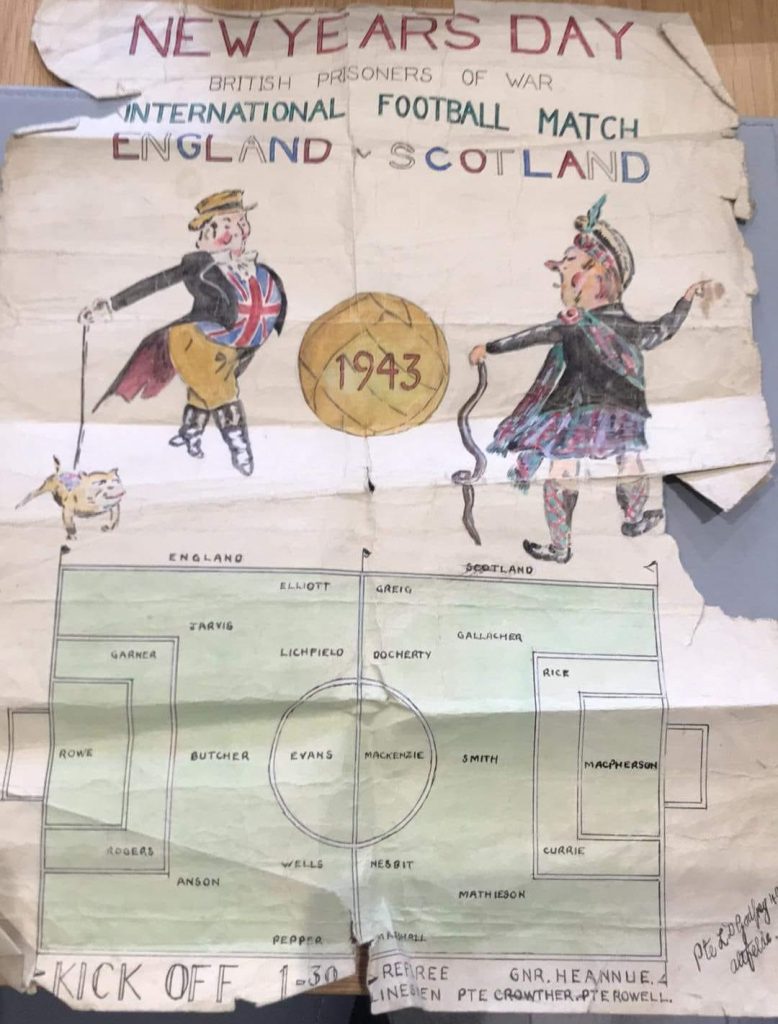
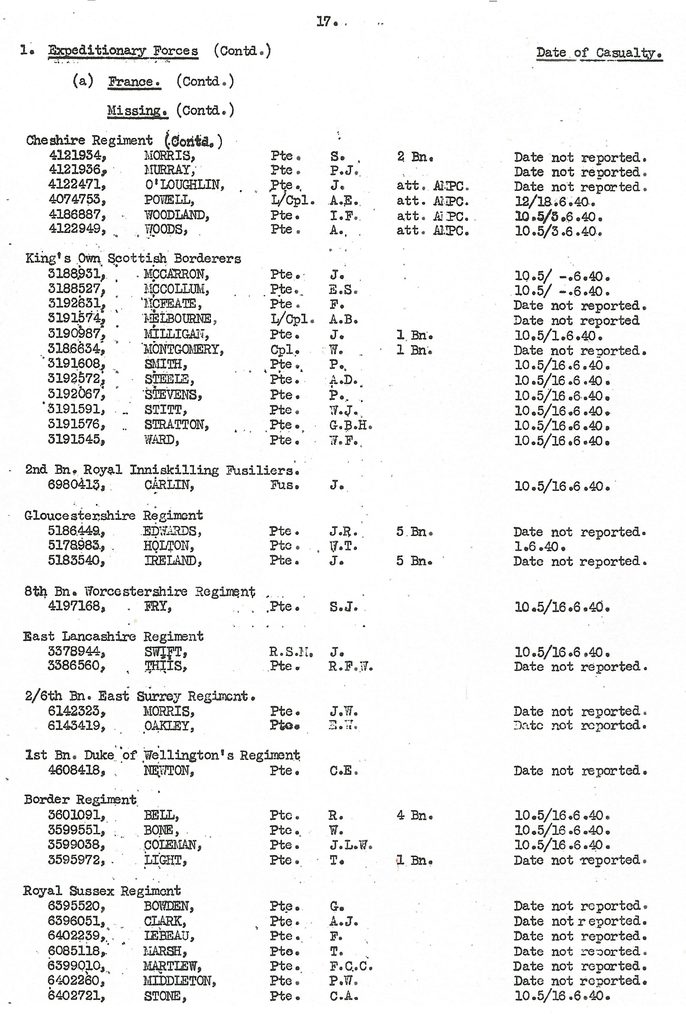
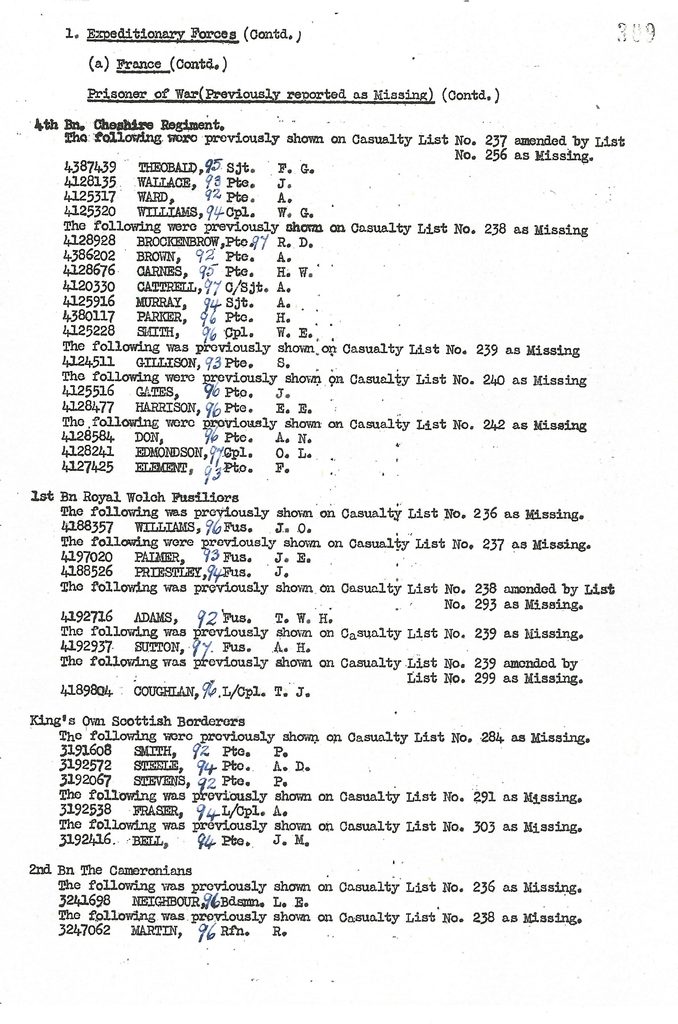


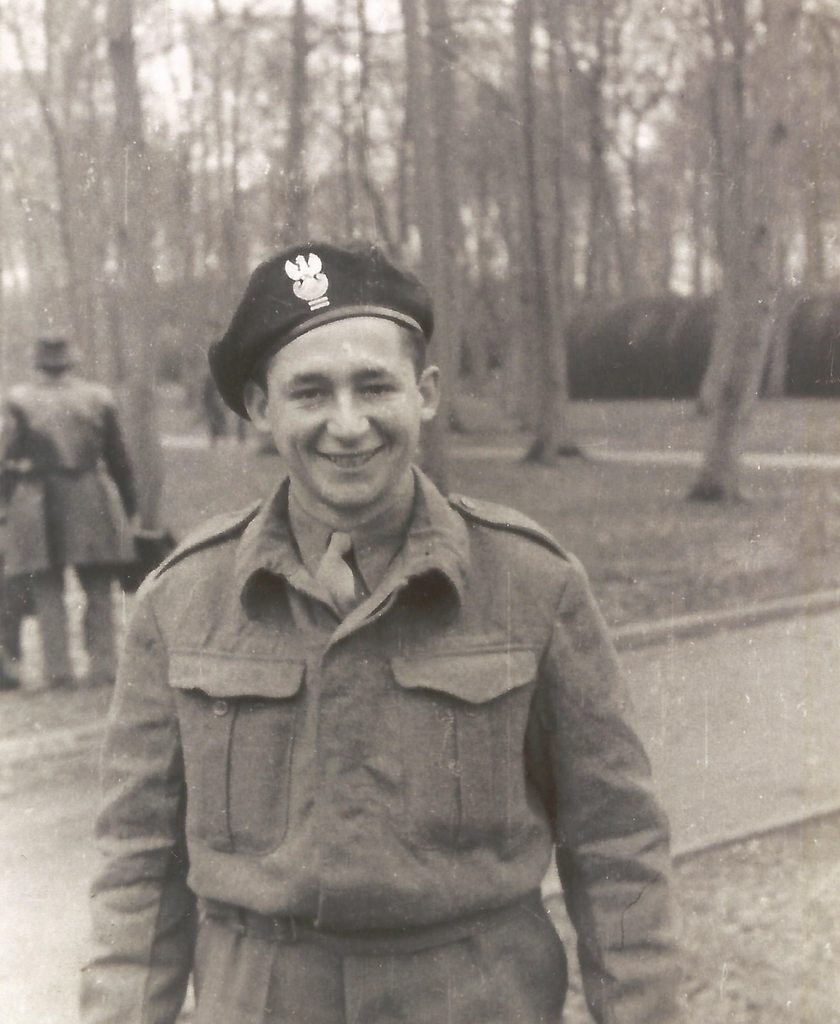
Janusz Kazimierz Stanislaw Tomczak – Liz Campbell’s father
Shona said:-
“Before the war Grandpa worked as a waiter.
In 1939 when Poland was invaded my Grandpa was 18 and in 1940 he was deported to the East along with other members of the family. He made it back to Warsaw in 1942 and in 1943 he was sworn into the Home Army -the Polish Resistance which was the largest resistance movement during WW2.
The Warsaw Uprising began in 1944 and the Home Army fought against the Germans. He learned to shoot and survive although fearing every day that he would be arrested by the Germans. At one point Grandpa survived on cabbages and potatoes and travelled through a sewer to get to a different part of the old town. When, in October 1944, the Warsaw Uprising ended, the Home Army were marched out of Warsaw and Grandpa was taken to two different POW camps in Germany.
When he was released he went to Italy with General Anders and the Polish 2nd Corps – he always said that going to Italy saved his life. He came to England in 1946 sailing into Liverpool.
Grandpa changed his name when he joined the Home Army but went back to using his own name when he went to Italy. He always said to me “…I helped to give you the freedom that you have today.” He never went home to Poland as it was too dangerous and he was always very frightened that he was going to be found. He was affected by his experiences for the rest of his life – keeping cupboards well stocked with food in case supplies dried up and shutting curtains in the evening. He was very protective of his family.
Lots of Polish families took risks to help Jewish people especially children and babies and Janusz played his part in helping to get children out of the Ghetto.”



What did Grandpa Do In The War Anyway?
By Kenneth Whyte for his Nephew and Nieces.
Extract
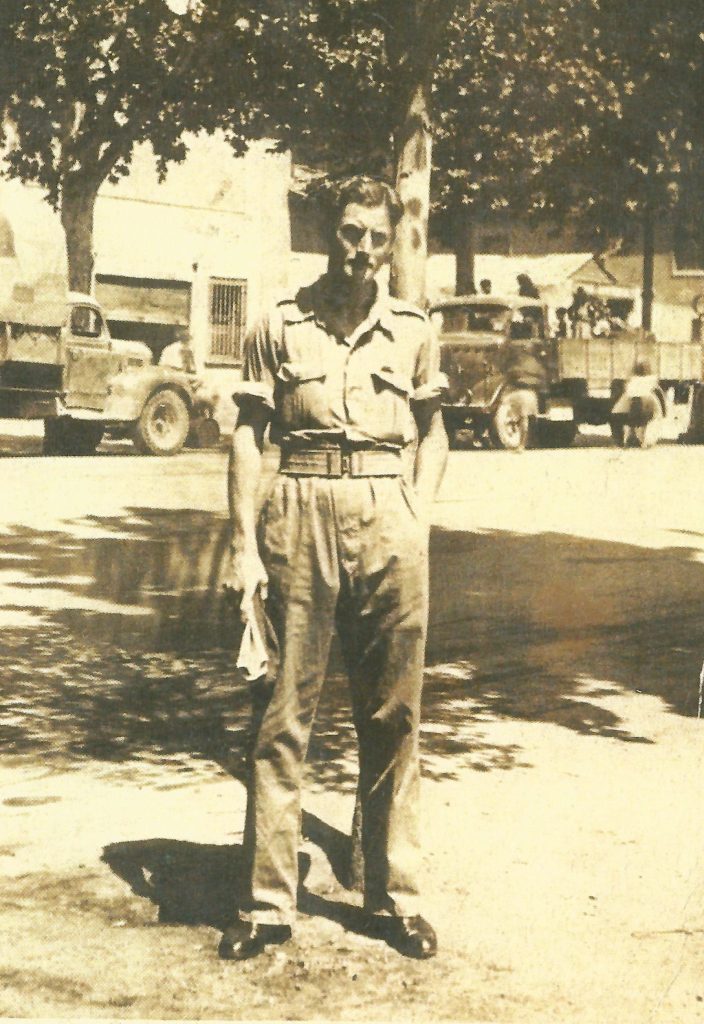
NEIL WHYTE
Gunner
142 Field Regiment the Royal Devon Yeomanry
Royal Artillery
At first he was based on the outskirts of London as air defence unit, then a coastal defence at the entrance to the River Thames. Next Yorkshire for intensive training on a new tank called ‘Bishop’ which had many problems with the design. Rothesay, Isle of Bute next training place. Then under the command of the 1st Canadian Division extensive training with combined operations on Lochfyne. There was tragedy with the loss of quite a few Canadians during practice landings. More training on the Ayrshire coast and a visit from Lord Louis Mountbatten during his pep talk saying –
“of course some of you have only got a one way ticket”
On 29th June, 1943 they sailed from the Clyde, it was thought by the majority on board that they were on another exercise but became apparent that they were heading overseas, even senior officers would not know the destination until they entered the Mediterranean some three weeks later on. They were now informed that they would be making an amphibious landing at ‘Pachino’ on the southern tip of Sicily, they would be part of an invasion force of over two hundred and fifty ships. The Regiment commanded by 1st Canadian Division as part of the Eighth Army under the supreme command of General Montgomery.
The Eighth Army had made good progress from the south and met up with the Fifth Army. However recriminations within the allied camp had begun. The landings at Salerno had been a near disaster. The Italian terrain was largely unsuitable for the types of vehicles used in the assault. General Montgomery put pen to paper and recorded “Before we embark on major operations on the mainland of Europe we must have a master plan…. I have not been told of any master plan and I must therefore assume that there was none”. The whole Italian campaign was badly vitiated from the start by profound American and British disagreements.
Matthew Parker stated “Monte Cassino was the bitterest and bloodiest of the Western Allies struggles with the German Wehrmacht on any front of the Second World War”.
Although Rome was liberated the months of misery and suffering at Cassino was a ‘hollow victory’.
The Regiment was disbanded at Resina a small suburb of Naples. Many of the men were detailed to guard thousands of German prisoners, including
Gunner Whyte, he managed to send a few lines home –
“Dear folks I am on duty again tomorrow. I have not been transferred but I expect to be soon, but I will let you know my new area. I feel worse now than I have ever done since coming overseas”.


Gerry Burke.
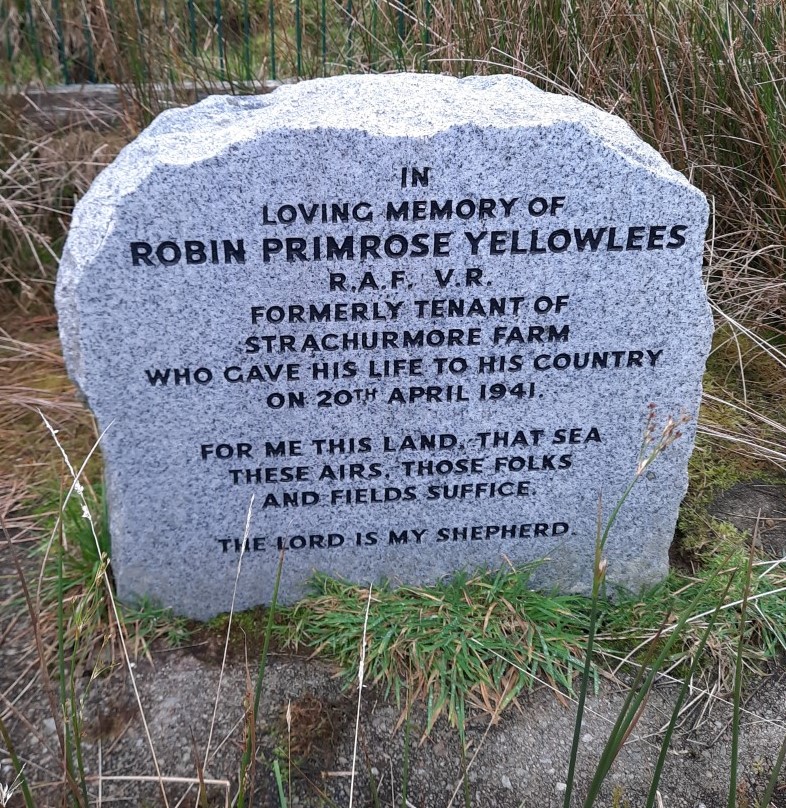
Tragic end for brave young farmer who piloted wartime land use reforms — and an RAF Spitfire.
Commemorated by a rough-hewn stone on a Cowal hillside and an ornate candleabra in Iona abbey, the young farmer of Strachur who fed hungry Glasgow children their last Christmas dinner before war broke out.”Father Christmas in a kilt”: (Very Rev. Dr.Hugh Douglas)
Killed after training as a volunteer fighter pilot. “Jesus wept. He has his wings now.”: (Rev. Dr.George MacLeod, founder of the Iona Community)
Local eyebrows were surely raised when a precocious teenager from beyond the Cowal peninsula signed a sheaf of legal documents for the lease of a historic Strachur farm with Lady George Campbell between the wars in 1932.
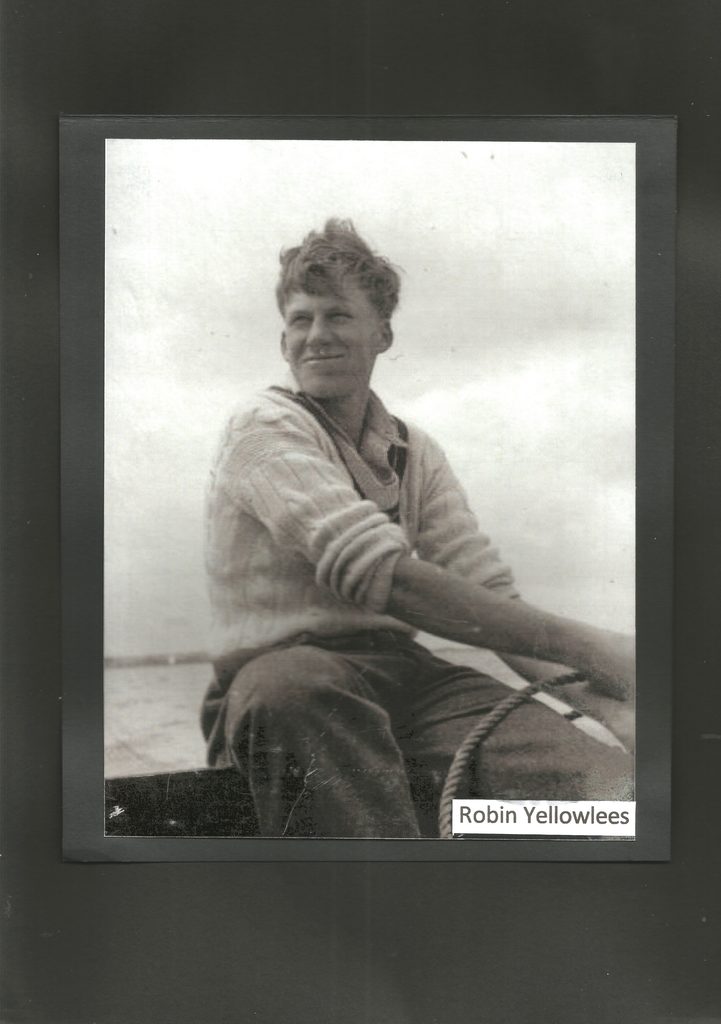
Robin Primrose Yellowlees, just 19, was now the tenant of the Strachurmore cattle pastures and cropland with hill grazing for 900 sheep, part of the ancestral lands of the ancient MacArthur Campbell clan when Mary Queen of Scots visited the parish in 1603.
A relatively privileged background could probably have set him up in a family-related worldwide textile company but, from his earliest years, he was destined to become an environmental hill-farming eco-warrior long before the term was invented.
From a Perthshire uncle he’d inherited an almost religious vocation for traditional ways to feed a hungry, undersupplied nation which a spell at agricultural college did not satisfy. So he packed his bags for hands-on experience in Denmark, Canada and the Australian outback and returned on a self-sufficiency mission to promote nature’s ways against the advance of industrialised agriculture and chemical pest control.
It was no pretentious young “gentleman farmer” in the mould of Jeremy Clarkson who pioneered Strachurmore as an influential “organic” farm crusader in the national press. Many grazings were shrinking under an uncontrolled tide of bracken growth and much of the native manpower had drifted away to the industrial belt.

Even before basic foods were rationed on the outbreak of war in 1939 home-grown supplies had already been hollowed out and Britain was importing half its meat and eggs and three quarters of its cheese.
And the politicians listened when he preached against the agri-economic shift from self-sufficiency, trading expensive industrial exports for cheap, inferior food imports with artificial concentrates and additives. Many agreed that bracken infestation and unemployment were root causes in the west Highlands and he proposed funding the latter to tackle the former based on a ground-breaking volunteer programme at Strachurmore.
Here, with his mother Mary’s help, he housed, fed and entertained groups of family and friends and student and schoolboy vounteers in a hands-on mission to get the land back under control and harvest the most from it.
Admitting the problem was “quite out of control”, the pre-welfare state Department of Agriculture renewed grants in 1940 when Robin suggested similar work could be financed by unemployment benefits and farmer contributions.
The newspapers of the day reported his ethical and ideological pleas, some from Strachur village hall political meetings, and he appeared destined to be a high-flyer in more ways than one.
The highly-principled young man shrugged off his reserved occupation immunity from war service and voluntarily signed up to defend his country as a fighter pilot with the Royal Air Force in1940.
Sadly, it was to be a wartime air crash which prematurely ended his life as he completed leading aircraftsman training three weeks after the Clydebank blitz on April 20, 1941. We’ll never know the circumstances but there had apparently been problems with the aircraft type and the weather was bad. The entire crew was wiped out.
Robin’s death “on active service”, reported on the news pages of the old Glasgow Herald, referred to his land use campaign and described him as “an exceedingly fine type of young Scotsman.” He was just 26 years old.
His parents Mary and David and younger brothers Walter (Watty) and David were devastated when the news was broken and that his remains were to be cremated at Stoke on Trent. There was no mention of the cause in the War Office notification of the crash.
In “A Time To Weep” which cross-references ethical agricultural practices with his deep Christian faith, Walter Yellowlees refers to his brother’s motivation and light-heartedly recounts “hilarious, hard-work” episodes from Strachurmore visits.
He tells of piping the volunteer parties shouldering their scythes to the bracken slopes after farmhouse breakfasts worthy of the name. Weary limbs recovered at nightly socials in the barn where the overflow slept contentedly in the hayloft after mother’s home cooking and baking.
Beyond the Rest and be Thankful, some less fortunate were also grateful for her kitchen skills and his and meat and kailyard veg donations
The Rev.Hugh Douglas of Govan old parish church in Glasgow delighted in the tale of the kilted Christmas Eve visitor who arrived out of the fog at his Glasgow manse bearing gifts of food for hungry families in the district.
“Haunted”, Robin told him, by their poverty, he’d brought joints of mutton, white puddings, potatoes and vegetables, down from Strachur on his sidecar-motorbike. He said: “I shall always remember … Father Christmas in a kilt. There was a kind of glow about him.”
Dr George MacLeod, founder of the Iona Community might have been inspired by Robin’s land squads to attract Glasgow’s unemployed to reinstate the island’s sacred historic buildings.
He wrote: ” I spotted him to lead young Scotland back to the land again. Even at his present age he almost could have done it.” In a poignant letter to his mother he added: “No death has moved me so deeply for years …He has his wings now and if God allows him to fold them for an hour I will eat my hat.”

